What “Design” Means Before You Protect It
Buyers ask about confidentiality at a specific moment: the moment a file is about to leave their computer. Before that moment, the word design has usually not been defined, and that is where most of the trouble starts. A supplier can only protect what has been identified, and a buyer can only complain about a leak if they can say which document leaked.
In art supplies, design is rarely one thing. It is a packaging layout, a bottle silhouette, a set configuration, a colour draft, or a printed mark on a handle. Each of those travels differently, is seen by different people, and can be protected in a different way. Treating them as one lump called the artwork is what produces a confidentiality conversation that sounds serious and settles nothing.
The Files Buyers Actually Send
Four kinds of file come in, and they carry different risks.
| File type | What makes it hard to protect |
|---|---|
| Packaging artwork | it looks like a marketing document, so it gets forwarded |
| Bottle shape or mould drawing | once tooled, the shape exists in the physical world |
| Set configuration | usually a spreadsheet, and spreadsheets circulate |
| Colour draft | two chips can be near-identical and still be different |
Packaging artwork is the most common and the least sensitive: a layout, a logo, a colour bar, some copy. It is also the file most likely to be forwarded internally without a second thought, because it looks like a marketing document rather than a design.
A bottle shape or a mould drawing is the most valuable and the least reversible. Once a silhouette has been tooled, the shape exists in the physical world, and no undertaking can put it back in the envelope.
A set configuration is the most under-protected. The combination of articles, counts and packing that makes a set is usually described in a spreadsheet rather than a drawing, and spreadsheets circulate.
A colour draft is the most easily copied and the hardest to prove. Two colour chips can be near-identical and still be different, which is a question about measurement rather than about confidentiality.
Design protection begins with saying which of these four you are actually sending, because a vague request for confidentiality gets a vague answer, and a vague answer is what both sides will rely on later.
Where a File Travels Inside a Supplier
A design file does not go from the buyer’s inbox to the production line. It passes through hands, and the points where it changes hands are the points worth naming.
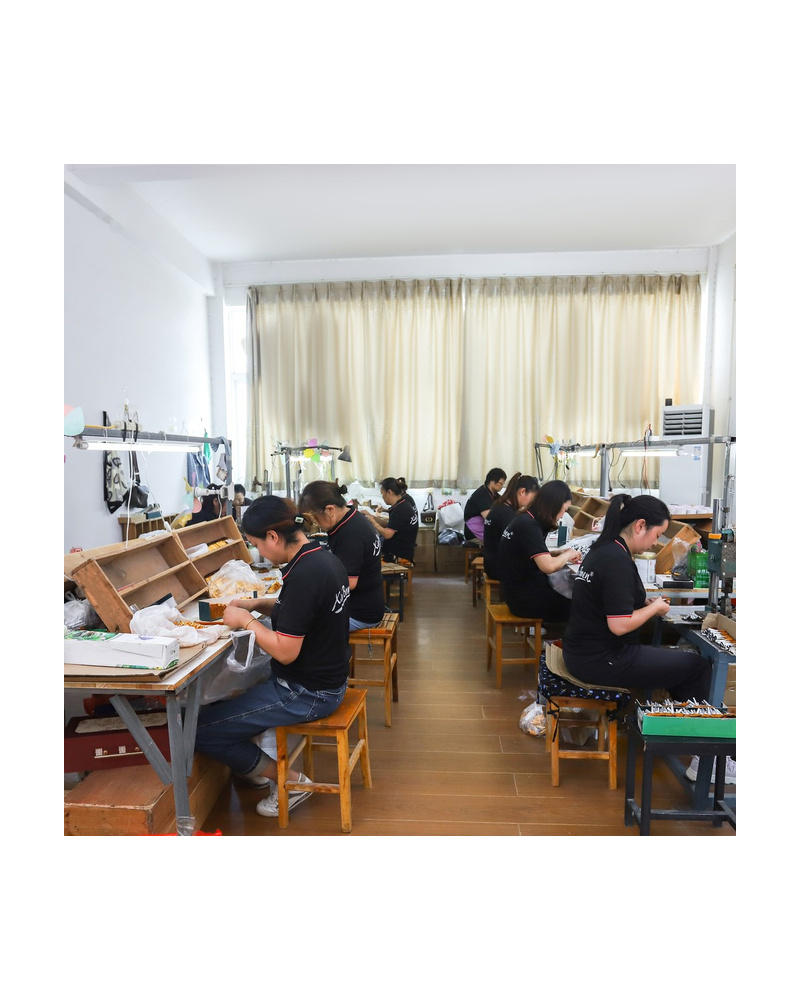
Typically the file is received by whoever owns the enquiry, then reviewed for feasibility by the person who knows the process, then turned into something a machine can use, then checked against a physical sample, then archived. Each of those steps involves a different desk, and in a small factory some of those desks belong to the same person.
This is why the useful question is not “will you keep it secret” but “who will open it, and at which step”. A supplier that can describe its own sequence of desks is a supplier that can be held to one. A supplier that answers only with an assurance has told you how it feels about the question, not how it handles files.
The Two Moments Worth Confirming in Writing
Two points in the sequence deserve a written record, and neither requires a legal document to be useful.
The first is receipt. When the file arrives, both sides should agree what was received, in what format, and what it is for. This is unglamorous and it prevents the most common dispute in this category, which is not theft but scope: a supplier producing a variant the buyer says they never asked for, using “the files you sent” as the justification.
The second is the sample. When the physical sample is approved, the approved sample becomes the specification. Everything after that is execution, and the file itself stops being the reference. A buyer who confirms the sample in writing has converted a design into a control document, which is a stronger position than any promise attached to the original file.
What the Site Promises, and What It Does Not
The OEM section of the company’s ODM and OEM page is headed, in the company’s own words, “Keep One’s Mouth Shut”, and it continues: “Pay attention to the privacy of customers, to ensure the uniqueness of customer products to the greatest extent”. That is the promise, and it is worth reading the last four words carefully. “To the greatest extent” is a degree, not an absolute, and it is the honest form of the promise: no supplier can guarantee that a design will never be seen, because producing it requires people to see it.
What the page does not publish is equally worth naming. There is no confidentiality template, no retention period, no statement of which roles have access, and no description of what happens to files when a project ends. Those are not omissions to be embarrassed about; they are simply not on the page, and a buyer should not assume they exist because the heading sounds strong.
The practical consequence is that the undertaking has to be built for the order rather than taken off a shelf, and that the supplier side of it is visible in how the company is organised: the company profile describes the structure the files pass through. A page that publishes an OEM / ODM field, such as the six-colour 3D paint pen set, tells you the mode is offered without telling you which one an order will use. The ODM and OEM page states the intent; the terms are a per-order conversation.
What a Confidentiality Undertaking Can and Cannot Cover
A written undertaking can reasonably cover four things: who may access the files, that they are used only for the buyer’s order, that they are not passed to a third party, and what happens to them when the order closes. Those four are operational commitments, and an operation can be held to them.
It cannot cover three things that buyers often assume it does.
Ownership and confidentiality are different questions. A confidentiality undertaking governs who sees a file; design ownership governs who may use it once the order is finished, and the two are settled separately. It cannot stop a person from remembering a shape. It cannot transfer ownership of a design that was never the buyer’s to begin with. And it cannot make an unregistered design exclusive in every market, because exclusivity is a matter of registration and jurisdiction rather than of a supplier’s promise.
None of that makes the undertaking worthless. It makes it specific, which is the only thing that makes it usable. A promise that lists the four commitments and admits the three limits is a better document than one that claims everything.
Why the Printing Step Is the Real Test
By the time a handle reaches the press, the artwork has stopped being a file. It has been sized, proofed and set up on the machine, and the mark is about to be transferred onto a bare wooden handle with no brush head fitted yet.
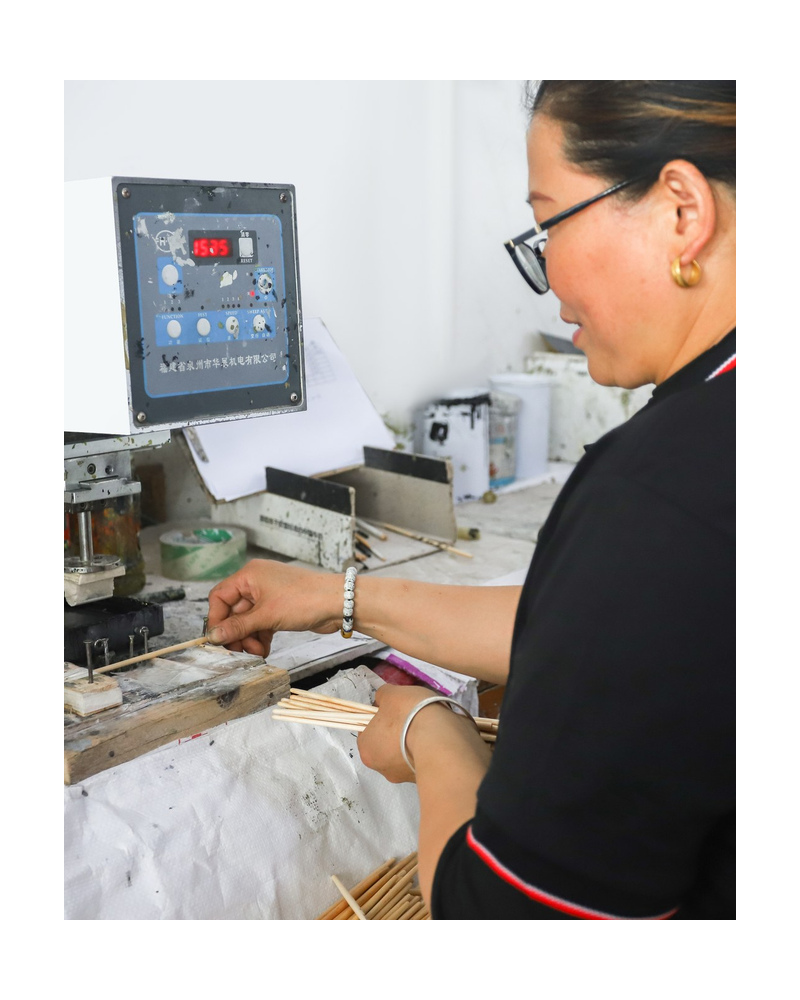
That is the moment when confidentiality stops being an administrative question. Before the press, the design exists as data that a small number of people can read. After the press, it exists as physical samples, and physical samples travel further than files do: they go to the buyer, to a trade fair, into a drawer. A supplier that controls the sample as carefully as the file is controlling the thing that actually leaks.
It is also the step where the buyer’s own approvals start to matter more than the supplier’s promises. Once a printed sample exists, the question is no longer whether the file was protected but whether the approved version is the one in production.
Before You Send the Files
Four things are worth settling before the first file goes out, and none of them requires a lawyer.
Say what you are sending, using the four categories rather than the word design. Ask which roles will open it, and at which step. Agree what the file may be used for, and what happens to it after the order. And decide in advance how the approved sample will be recorded, because the sample is what the rest of the order will be measured against.
The mode you choose changes all four answers. Under one mode the design is yours and the supplier is executing it; under the other the article is the supplier’s and you are branding it. That difference is set out in a separate article on OEM or ODM, and who owns the design in each, and it is the first thing to settle, because confidentiality terms attached to the wrong mode protect the wrong thing.
If a design has to be quoted before any of that is settled, send the description rather than the drawing first. The contact page is the shorter route than sending a file and hoping the reply covers it. The range the files will eventually be applied to is visible in the brush catalogue and the paint catalogue, and the customisation scope, including customers’ own designs, is on the one-stop service page.
Xin Bowen is a Chinese art-materials manufacturer. The company and its distribution operation are based in Yiwu, Zhejiang, and production is carried out at our own plants. We supply brushes, paints, palettes, paper and canvas, sketch series and studio tools, among other art materials, to wholesalers, brand agents, art-supply retailers and school programmes.
Send us the model or the use case, and the quotation comes back item by item — MOQ, carton quantity and lead time included.