The Question Behind the Acronyms
Almost every first conversation about a custom art supplies order contains the same unresolved question, and it is usually asked in the wrong words. The buyer asks whether the supplier “does OEM”, meaning: can you make my product. The supplier answers yes, meaning: we can make anything. Both are satisfied, and neither has established who is responsible for the design.
| Question | OEM | ODM |
|---|---|---|
| Who brings the design | the buyer | the supplier |
| Who owns the design | the buyer | the supplier |
| Where the specification comes from | the buyer’s drawing | the supplier’s published page |
| Can the same article go to another buyer | not without reusing the buyer’s design | yes, unless something else was agreed |
OEM vs ODM is not a vocabulary test. It is a question about which side brings the design, and almost everything else in the order follows from the answer: who owns the drawing, who carries the risk if it turns out to be someone else’s, who controls the specification, and whether the article you are buying can be sold to the buyer standing next to you.
OEM: You Bring the Design
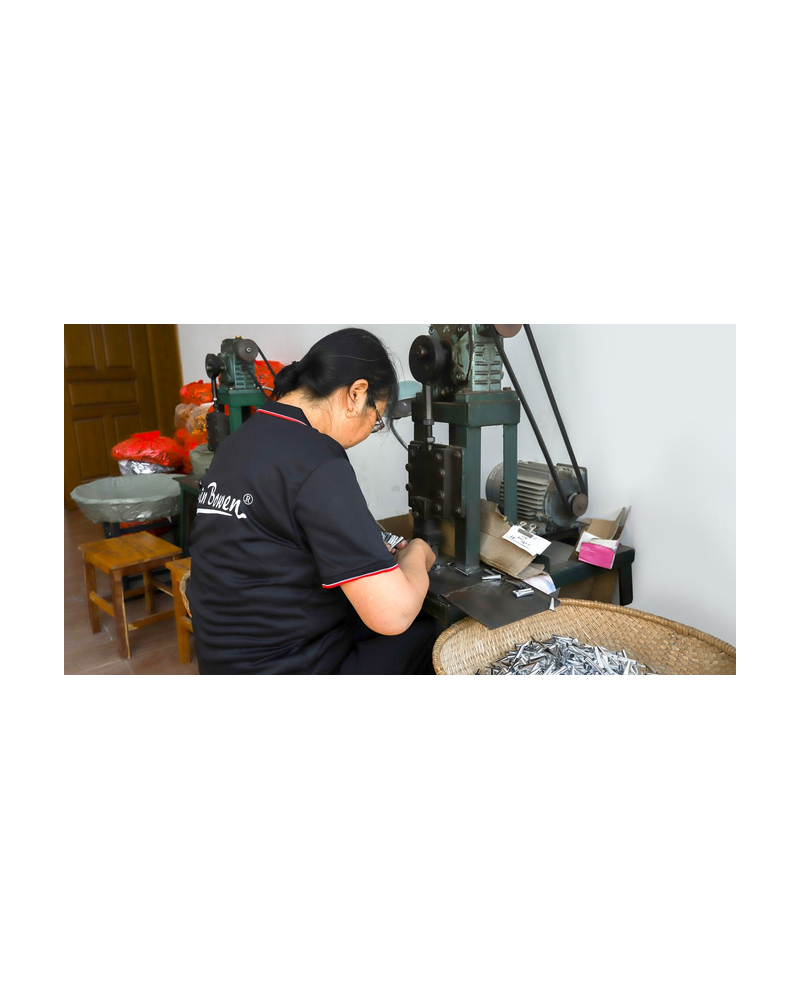
An original equipment manufacturer builds to somebody else’s design. The buyer supplies the drawing, the specification or the reference sample; the supplier’s job is to execute it and to keep it to itself.
That last clause is not decoration. The reason the OEM section of the company’s ODM and OEM page is headed “Keep One’s Mouth Shut” is that in OEM the supplier is handling a design it did not create and cannot reuse. The page frames that promise as attention to “the privacy of customers” rather than as a legal protection, which is a fair description of what silence actually is inside a workshop.
In a custom order under OEM, the buyer’s side of the work is heavier than most first-time buyers expect. The design files have to be complete enough to build from, the tolerances have to be decided by someone, and the approval has to come from the buyer rather than from the supplier’s judgement. What the buyer is buying is execution: presses, jigs and assembly steps that do what the drawing says. Execution is only as good as the instruction.
ODM: You Choose From What Exists
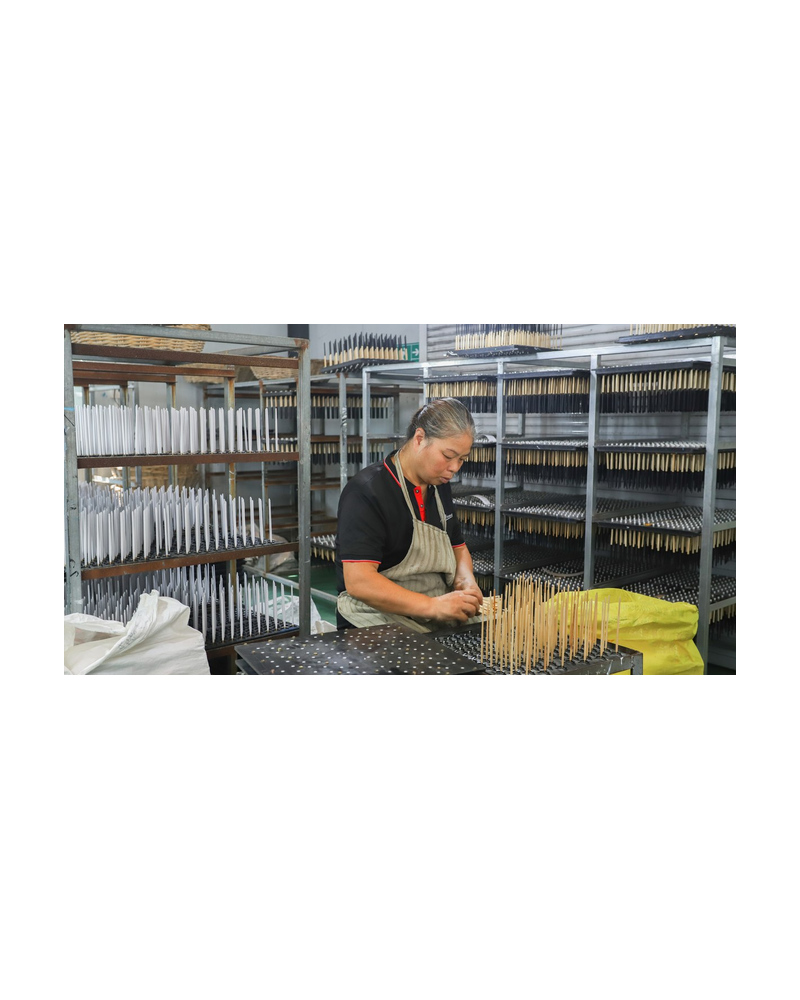
An original design manufacturer brings the design. The supplier has already developed the article, decided how it is built, and often holds the tooling; the buyer’s contribution is the brand on it.
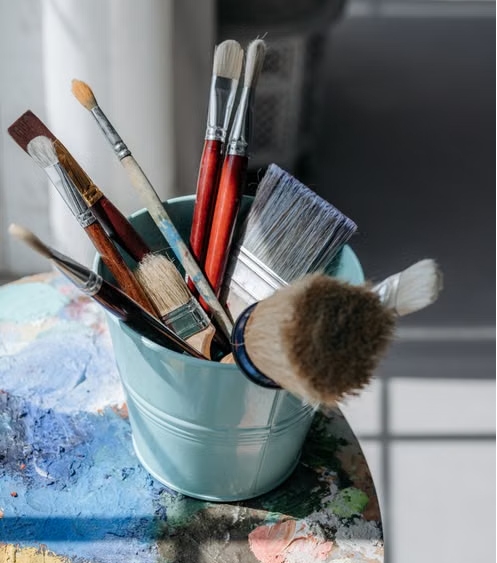
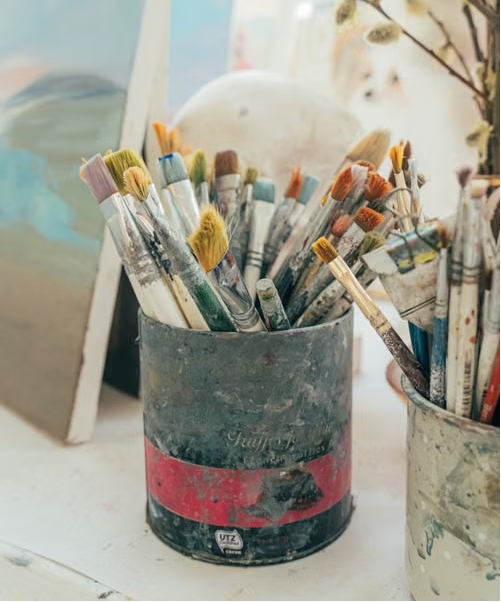
The article exists before the buyer asks for it: racks of finished brushes, sorted and standing in rows, are what a catalogue looks like when it is physical. The company’s own description of this mode is short and unusually candid: “Art Without Boundaries — Any business who wants to belong to their own brand can be satisfied.” It then adds: “Support customers to customize a small number of products.” Read together, those two sentences describe the trade precisely: the article exists, the volume can start small, and what the buyer is really choosing is a catalogue article with their own brand label on it.
Under ODM the work shifts. The buyer is no longer specifying; the buyer is selecting, and then checking that the selection is good enough to sell. That is a different job, and it is faster only if the buyer is honest about what they are giving up.
What Changes When the Design Is Yours
Four things change at once when the design is the buyer’s.
Design ownership becomes an asset rather than an argument: the drawing is the buyer’s property, and the supplier’s use of it is bounded by the order.
Responsibility for the design becomes the buyer’s too. If the artwork turns out to belong to somebody else, the supplier executed a brief and the buyer supplied it. Buyers who have never sold a private design often discover this only when a marketplace complaint arrives.
The spec sheet becomes a contract rather than a description. Every value on it, from the head type to the colour of the handle, is something the buyer chose and can therefore insist on.
And the article becomes exclusive in practice, because the supplier has no right to reuse it. That is the strongest practical protection OEM offers, and it costs nothing to state in writing.
What Changes When the Design Is Theirs
Under ODM the same four items invert.
Design ownership stays with the supplier. What the buyer owns is the brand label, not the shape.
Responsibility for the design sits with the supplier, because the article is theirs and it is being sold as an existing product rather than as a custom build.
The spec sheet is published rather than negotiated. That is why product pages in this range carry a labelled specification block at all: the article is fixed, so the page can describe it in advance.
And exclusivity is not implied. Nothing about buying a catalogue article stops the supplier from selling the same article to another buyer with a different brand on it, unless that has been agreed separately. A buyer who wants exclusivity in ODM is asking for a change of mode, not for a discount.
The Two Slogans on the Page, Read Closely
The page does not define the two modes in the language of trade law. It gives each one a slogan, and the slogans are more informative than they look.
“Keep One’s Mouth Shut” is a promise about silence. It belongs to the mode where the supplier knows something it must not repeat, which is OEM.
“Art Without Boundaries” is a promise about access. It belongs to the mode where the supplier’s own library is opened to the buyer, which is ODM.
Neither slogan says anything about ownership, which is the part buyers most need to know. That is why a product page can carry an OEM / ODM field and still leave the important question open. The field says the supplier does both; it does not say which one your order is.
Switching Modes Without Starting Over
The two modes are not a one-way door. A buyer commonly begins with a catalogue article, tests the market, and then wants the article to become theirs.
That switch is possible, but it is a change of ownership rather than a change of paperwork. The article has to stop being the supplier’s catalogue item and become the buyer’s design, which means the design has to be transferred rather than lent. Buyers who plan the switch from the start tend to negotiate it while the order is still small, because that is when the terms are cheapest to settle.
The other direction is more common and less discussed. A buyer with a full design sometimes discovers that the market wants a simpler version of it, and that the simpler version already exists as a catalogue article. Moving from OEM to ODM in that case is not a retreat; it is a product development decision made with better information.
Which One You Are Actually Buying
The question is not which mode is better. It is which one you are equipped for.
If you have a design, a specification and a view on how the article should be built, you are buying an execution partner, and OEM is the match. If you have a brand, a market and no intention of specifying a product from scratch, you are buying a ready-made solution, and ODM is the match.
Most of the friction in this category comes from buyers who want the control of one mode and the speed of the other. The honest position is to pick which of the two matters more, and to write the other one down as a cost.
Whichever you pick, the next question is the same one: what happens to the design once it exists. For OEM that is a confidentiality question, and it is set out in a separate article on what confidentiality covers once you send artwork.
Both modes are described on the ODM and OEM page, and the customisation scope, including customers’ own designs, is on the one-stop service page. An example of a page that publishes the OEM / ODM field is the six-colour 3D paint pen set. The two largest ranges these decisions get applied to are the brush catalogue and the paint catalogue, and how the company is organised behind them is on the company profile.
If the mode is still open, describe the use rather than the article: the contact page is where that conversation starts.
Xin Bowen is a Chinese art-materials manufacturer. The company and its distribution operation are based in Yiwu, Zhejiang, and production is carried out at our own plants. We supply brushes, paints, palettes, paper and canvas, sketch series and studio tools, among other art materials, to wholesalers, brand agents, art-supply retailers and school programmes.
Send us the model or the use case, and the quotation comes back item by item — MOQ, carton quantity and lead time included.