

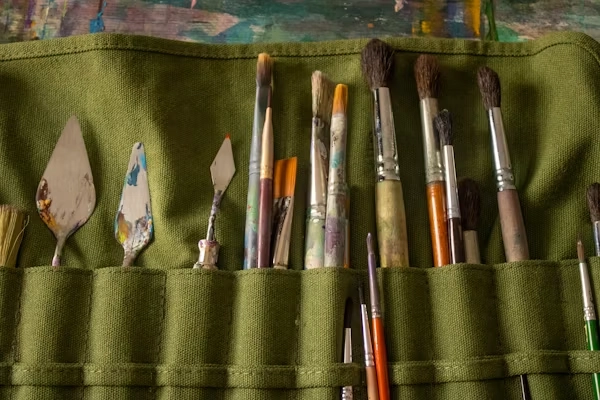
Choosing the right brush can truly transform how an oil painting appears and feels. Various oil brush types produce unique marks. These range from strong background strokes to delicate lines and gentle blending. A quality brush never replaces true skill. Yet it supports the artist in managing paint, pressure, texture, and detail with greater confidence. Oil painting usually requires multiple brush shapes. One single brush rarely performs every task effectively. Certain oil paint brushes suit broad color areas well. Others work better for sharp edges, fine details, or natural texture effects. For students, hobby artists, studios, and art supply buyers, understanding each brush function simplifies the process of selecting a practical brush set.
At Xin Bowen, we supply art materials. These include painting brushes, paint sets, sketch tools, and creative supplies for users at different skill levels. Finding the best sketchbook for charcoal is just as important as choosing the right brush for oil work. Our products meet needs for daily practice, classroom use, retail supply, and customized art material orders.
Common Oil Brush Types and Their Uses
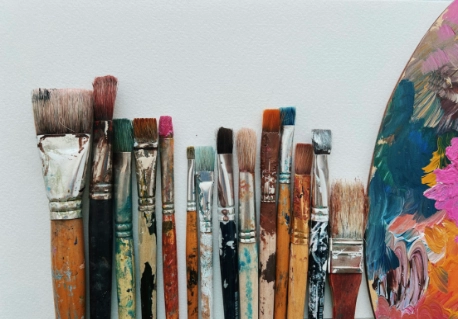
Different brush shapes give different results. A complete brush set should include both general brushes and fine brushes, so artists can move from large areas to small details smoothly.
Flat Brushes for Strong Coverage
Flat brushes have a wide body and a straight edge. They are useful for backgrounds, color blocks, straight lines, and thick oil paint strokes. When used flat, they cover large areas quickly. When turned sideways, they can also create thin lines.
Flat oil paint brushes are often used for landscapes, still life, abstract painting, and base layers. They give the painting structure and help artists place color with confidence. For beginners, flat brushes are also helpful because they clearly show how pressure changes stroke width.
Round Brushes for Flexible Control
Round brushes are one of the most useful oil brush types. They can draw lines, shape forms, fill small areas, and create curved strokes. A light touch makes a thin mark, while stronger pressure creates a wider stroke.
Round artist brushes work well for flowers, leaves, facial features, small objects, and curved details. They are suitable for both beginners and experienced artists because they offer a balance between control and freedom.
Many artist paint brush sets include round brushes because they support many painting methods in one tool.
Fan Brushes for Texture and Soft Blending
Fan brushes have spread-out bristles. They are often used for soft blending, grass, hair texture, clouds, and natural marks. In oil painting, a fan brush works best with light pressure. Too much pressure can flatten the texture and reduce control.
Fan brushes are useful for:
- Grass and leaves
- Soft skies
- Hair-like strokes
- Gentle blending
- Broken natural texture
Among oil brush types, fan brushes are not always needed at the beginning, but they become very useful when artists want movement and softness.
Filbert and Cat’s Tongue Brushes for Soft Edges
Filbert and cat’s tongue brushes have rounded tips. They sit between flat and round brushes. This makes them good for soft edges, curved shapes, flower petals, fabric folds, and portrait painting.
These brushes are helpful when the artist wants form without harsh corners. In oil painting, they can shape skin tones, fruit, flowers, and smooth objects with natural transitions.
Fine Brushes for Lines and Details
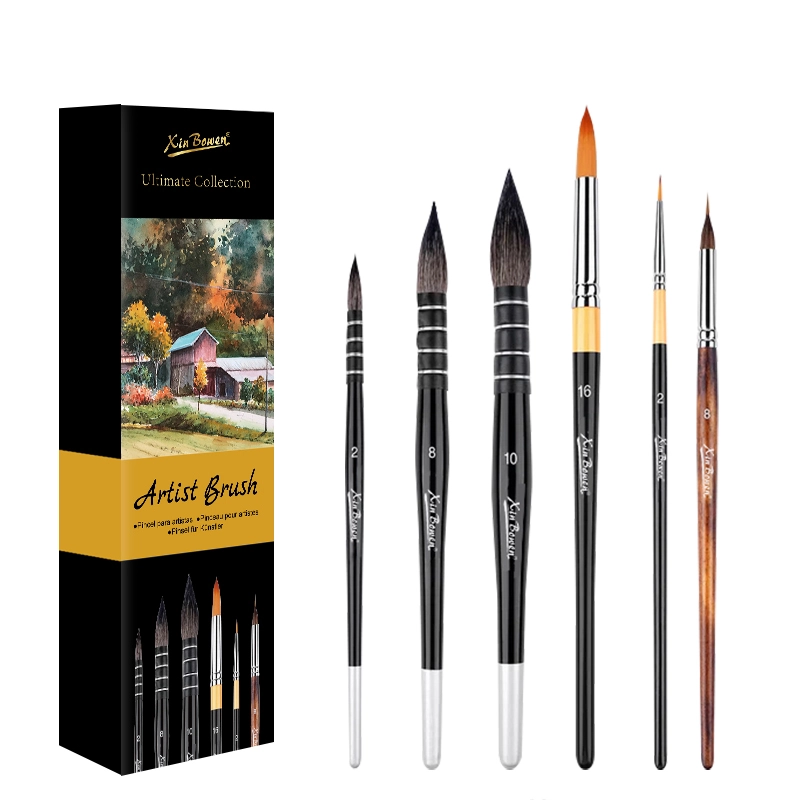
Large brushes build the painting, but fine brushes finish it. Small highlights, thin branches, model details, signatures, and careful edges all need steady control.
Liner Brush for Long Clean Lines
A liner brush has long, thin bristles. It holds paint along the hair and releases it slowly, making it useful for long lines. Artists use liner brushes for branches, hair strands, outlines, grass marks, calligraphy-style strokes, and signatures.
For oil painting, the paint may need to be slightly thinned so the line flows smoothly. A good liner brush should keep a sharp point and not split easily.
Xin Bowen offers liner brush options in different sizes for fine line work, model painting, decorative painting, and educational art use.
Detail Brush for Small Areas
A detail brush is made for precision. It usually has a small head and controlled point, making it suitable for tiny highlights, facial details, jewelry, model painting, and edge correction. As the thinnest paint brush in most kits, it reaches areas that broader shapes simply cannot.
Detail brushes should have good elasticity. If the bristles are too weak, the artist loses control. If they are too stiff, the paint may drag unevenly. Good detail brushes keep their shape while releasing paint smoothly.
Brush Materials and Painting Feel
Brush material affects how the paint moves. Shape decides the mark, but hair material decides the feel. For oil brush types, strength, softness, rebound, and paint holding all matter.
Synthetic hair is common because it is durable, easy to clean, and keeps shape well. Nylon and synthetic fiber brushes are often used for oil, acrylic, gouache, watercolor, craft painting, and mixed media work. In synthetic painting, these fiber brushes deliver consistent paint release and are easy to clean. They are also practical for schools, studios, and bulk supply.
Natural or mixed hair brushes are usually softer and may hold more liquid. They are often used for smooth blending, watercolor effects, and gentle transitions. Mixed hair brushes can balance softness and spring, making them useful for artists who want both control and smooth color release.
How to Build a Practical Brush Set
A strong brush set should not be random. It should cover the main painting actions: covering, shaping, blending, lining, and detailing. For most artists, a useful oil brush set can include:
- Flat brushes in small, medium, and large sizes
- Round brushes for shaping and drawing
- A fan brush for texture and blending
- A filbert or cat’s tongue brush for soft edges
- A liner brush for long lines
- A detail brush for final touches
Beginners should not buy only small brushes. Large and medium brushes help build the painting faster and with stronger structure. Small brushes should be used later for finishing details. Relying on just a single painting brush limits what an artist can achieve across different stages of a painting.
At Xin Bowen, our products include different art tools for painting, drawing, and creative learning. We also support ODM/OEM services for customers who need customized painting tools, packaging, or private-label art material sets. We also supply wholesale paint brushes for retailers and schools, and can build a custom paint brush set tailored to any art style, skill level, or budget.
Brush Care Tips for Longer Use
Even good oil paint brushes will lose shape if they are not cleaned well. Oil paint can dry inside the bristles and make the brush stiff. Poor cleaning may also loosen the ferrule over time.
Useful care tips include:
- Wipe off extra paint before washing
- Clean gently from ferrule to tip
- Do not leave brushes standing in solvent
- Reshape the brush head after cleaning
- Dry brushes flat or with the head upward
- Use detail brushes only for fine work, not heavy scrubbing
Proper care helps artist brushes keep their point, shape, and painting feel for longer use.
Conclusion
Oil brush types play an important role in every stage of painting. Flat brushes help build strong color areas. Round brushes offer flexible control. Fan brushes create soft texture. Filbert and cat’s tongue brushes shape smooth edges, while liner and detail brushes complete the final marks. A good brush set should match the artist’s surface, medium, style, and hand pressure. In each case, success comes from selecting the proper brush for the intended purpose rather than collecting a large number of options. This focused approach supports better outcomes while keeping the creative workflow efficient and effective. The same principle applies across creative fields—from oil painting to glass art techniques—where using the right tool for each step leads to better results.
FAQs
Q: Which oil brush types should beginners choose first?
A: Start with flat, round, fan, liner, and detail brushes.
Q: How heavy is one professional brush set?
A: Some Xin Bowen brush sets are about 210g–220g/set.
Q: How many liner brush sets fit one carton?
A: The HB-5501 liner brush set packs 96 sets/ctn, 22kg/ctn.