

In art education programs, pencil art drawing shading is not only a technical skill but also a measurable learning outcome.
For schools, training institutions, and art programs, shading quality often reflects whether teaching methods and drawing supplies are consistent, reliable, and suitable for structured practice. This article explains the shading methods used by skilled artists and, more importantly, how material performance affects shading results in educational and training environments.
Pencil Art Drawing Shading as a Foundation of Visual Depth
Pencil art drawing shading establishes depth, form, and realism in graphite-based artwork.
Without controlled shading, even well-proportioned drawings appear flat and visually incomplete. Skilled artists rely on shading to define volume, separate foreground from background, and communicate light direction clearly across the page.
Pencil art drawing shading also connects technical accuracy with artistic expression. While outlines describe structure, shading determines mood, texture, and spatial hierarchy. For this reason, experienced artists devote significant attention to value control rather than focusing solely on line detail.
Methods Commonly Used by Skilled Artists in Pencil Art Drawing Shading
Hatching and Cross-Hatching for Controlled Value Building
In structured art training, hatching is often the first shading method used to evaluate pencil response and pressure control. Parallel strokes reveal whether graphite output remains stable across repeated layering, which is critical for classroom exercises and long-duration practice sessions.
By adjusting line density, stroke direction, and pressure, artists gradually build value without relying on blending. Cross-hatching expands this method by adding intersecting strokes, allowing darker tones while maintaining surface clarity.
Consistent hatching depends on stable pencil response and predictable graphite output. When line weight fluctuates unexpectedly, value control becomes difficult, especially in detailed areas that require repeated layering.
Blending and Gradation Techniques for Smooth Transitions
Pencil art drawing blending techniques focus on creating smooth value transitions.
Artists often layer graphite first, then soften tonal shifts using controlled pressure or auxiliary tools. This approach is commonly used for skin, fabric, and atmospheric effects, where abrupt value changes would break realism.
Successful blending requires a balance between graphite softness and paper texture. If materials respond unevenly, gradation becomes patchy rather than smooth, reducing overall shading quality.
Inconsistent blending results are often not caused by technique alone. In training settings, uneven graphite cores or unstable paper texture frequently force students to compensate, slowing skill development and reducing comparability across assignments.
Stippling and Textured Shading for Surface Detail
Pencil art drawing stippling builds tone with dots rather than strokes.
This method gives great control over texture. It suits organic surfaces like stone, foliage, or skin details. Value changes through dot density, not pressure.
Stippling means repeated contact with the paper surface. So, pencil durability and core strength matter a lot. They help keep consistency during long sessions.
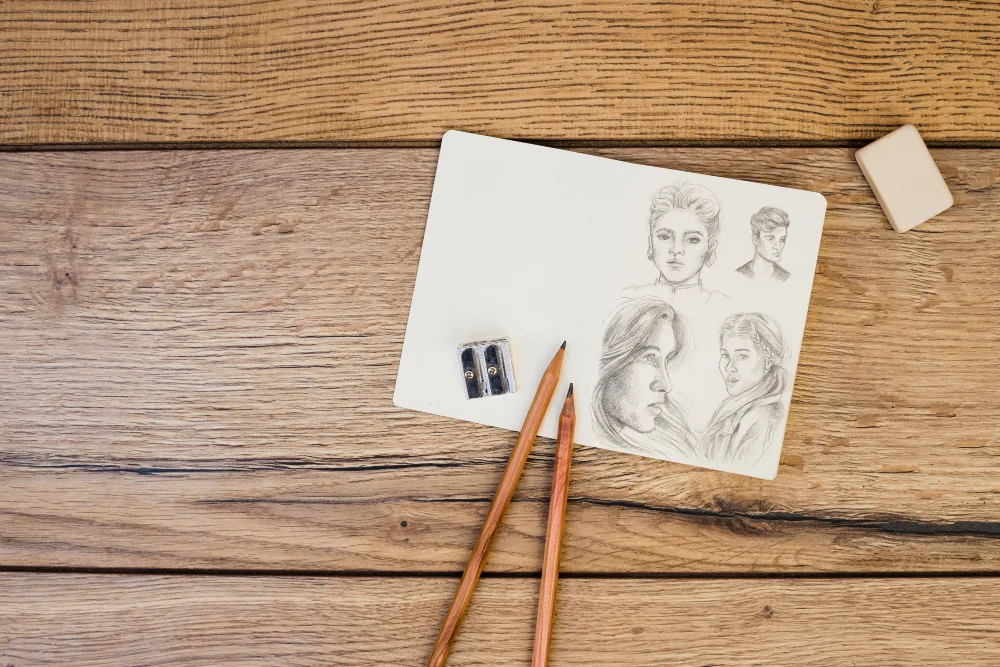
Pencil Art Drawing Value Control and Light Logic
Understanding Light Sources in Pencil Art Drawing
Pencil art drawing shading starts with a clear light source.
Without steady light direction, shadows seem false. Forms look shaky. Skilled artists pick the main light source first. Then, they apply shading. This makes highlights, midtones, and shadows fit together well.
Training exercises often use simple objects under one light source. They build value awareness. These studies help artists grasp how light wraps around form. After that, they can use more complex shading techniques.
Managing Value Range for Realistic Shading Results
Pencil art drawing realism depends on controlled contrast across the full value range.
Many shading issues arise when drawings remain confined to midtones, lacking both strong highlights and deep shadows. Skilled artists deliberately extend the value range while preserving tonal balance.
Achieving this control requires tools that respond consistently across pressure levels and hardness grades. Reliable materials allow artists to focus on visual judgment rather than compensating for tool limitations.
Tools That Influence Shading Performance
Graphite Pencil Grades and Their Impact on Shading Control
Pencil art drawing shading performance changes a lot across graphite grades.
In education and institutional use, graphite grade selection is not about artistic preference but about learning progression. Harder grades support early-stage value studies and error correction, while softer grades are introduced later to expand tonal range. A balanced set allows instructors to align shading exercises with curriculum stages instead of adapting lessons to tool limitations.
From a manufacturing view, graphite formulation and core centering are key factors. They affect tonal consistency. Stable pencils let artists expect steady shading across techniques.
Paper Texture and Surface Consistency in Pencil Art Drawing
Pencil art drawing paper texture directly affects the shading appearance.
Rough surfaces emphasize grain and texture, while smoother papers support blending and fine gradation. Inconsistent paper surfaces can disrupt value transitions even when the technique is correct.
Uniform paper quality allows shading techniques to perform as intended, making it easier to achieve repeatable results in both practice and professional work.
Shading Consistency as a Requirement in Art Education and Training Programs
In art education programs, shading consistency matters as much as technique instruction. When students use tools with uneven performance, instructors spend additional time troubleshooting materials instead of teaching light logic, value control, and form construction.
Consistent shading results allow educators to assess progress objectively. When all students work with predictable pencil response and uniform paper texture, differences in outcomes reflect skill development rather than material variation.
Supporting Tools Used Alongside Pencil Art Drawing
In structured training environments, supporting tools such as erasers and blending tools should reinforce shading principles rather than compensate for unstable materials. When primary tools deliver consistent performance, these accessories help students refine value transitions without masking errors in light logic or form construction.
Well-balanced drawing sets integrate pencils, paper, and supporting tools into a coherent system. This allows instructors to focus on skill progression and evaluation, instead of correcting inconsistencies caused by mismatched or unreliable materials.
Pencil Art Drawing Shading Requirements in Education and Training
Pencil Art Drawing Supplies for Classroom Consistency
Pencil art drawing education gains from steady material performance.
When tools differ too much, instructors handle material problems. They spend less time teaching shading principles. Standard supplies aid focused lessons and specific outcomes.
Educational settings need materials that mix durability with steady shading. This matters especially in repeated practice exercises.
Structured Practice Needs in Art Training Programs
Pencil art drawing training moves from basic value studies to complex compositions.
As skills grow, shading needs rise. They call for a wider tonal range and better material response.
Structured programs gain from drawing supplies matched to learning stages. This lets students build shading skills step by step.
How Xin Bowen Supports Reliable Pencil Art Drawing Shading Results
Pencil Art Drawing Product Design Based on Practical Shading Needs
At this stage, Xin Bowen addresses shading challenges from a production and supply perspective. As a manufacturer serving education programs and bulk buyers, we focus on graphite consistency, core centering, and paper surface stability to ensure predictable shading performance across large batches.
This approach allows art schools and training institutions to standardize their drawing supplies. Instructors can design exercises with confidence, knowing that shading results depend on student skill rather than material variability.
Our graphite pencils, sketchbooks, and pencil art drawing sets support steady value control. They aid smooth tonal transitions. They offer consistent performance in techniques like hatching and blending.
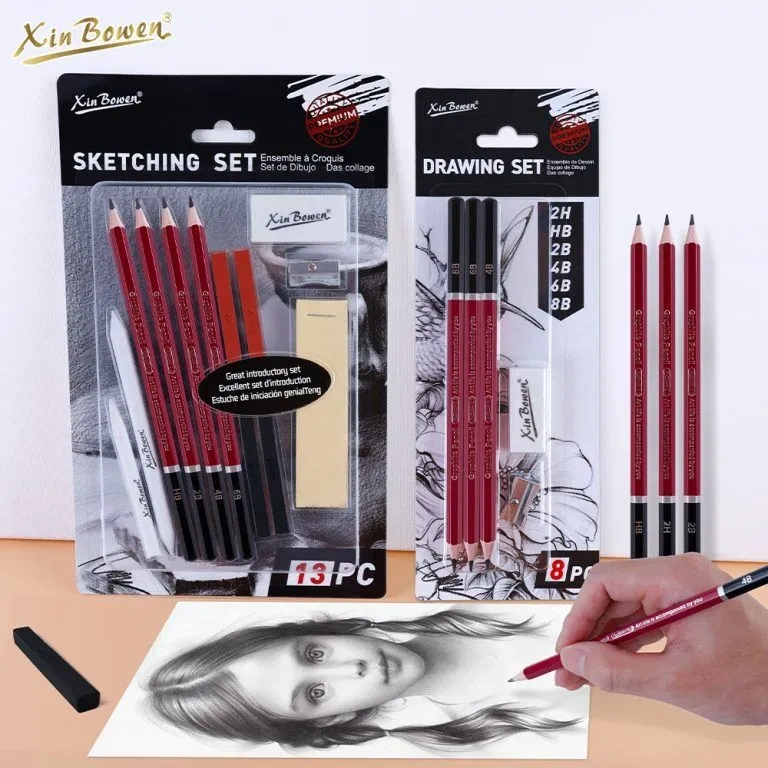
Each product type comes from real shading challenges. It avoids vague specs. This ensures tools fit actual artistic work.
Consistent Manufacturing Standards for Art Supply Performance
Steady pencil art drawing shading relies on manufacturing evenness.
Xin Bowen keeps tight quality standards in raw materials, processing, and checks. This guarantees uniform performance in big production runs.
This method aids long-term use in education, training programs, and professional studios. There, steady shading behavior is vital.
Customized Pencil Art Drawing Sets for Different Skill Levels
Pencil art drawing needs differ by experience and use.
Xin Bowen offers tailored drawing sets for beginners, advanced learners, and professional creators. Each setup balances graphite grades, paper texture, and extra tools. It matches shading demands.
Tailoring lets artists and groups focus on skill growth. They can trust stable, purpose-built materials.
For education programs and distributors evaluating pencil art drawing supplies, consistency and scalability often matter more than individual specifications.
Xin Bowen supports bulk supply planning, custom drawing sets, and long-term program standardization. Institutions can request product specifications or sample sets to evaluate shading performance before large-scale adoption.
FAQ
Q: What pencil art drawing shading methods are best for beginners?
A: Pencil art drawing beginners often gain from hatching and basic blending methods. These build value awareness slowly. They also strengthen their grasp of light direction.
Q: How do pencil art drawing tools affect shading quality?
A: Pencil art drawing tools shape shading through graphite evenness, hardness range, and paper texture. All these decide value control and smoothness.
Q: Which pencil art drawing supplies support realistic shading?
A: Pencil art drawing supplies with various graphite grades and steady paper surfaces help artists reach realistic shading results.
Q: Pencil art drawing shading techniques vs blending techniques, which works better?
A: Pencil art drawing, shading techniques, and blending techniques have different roles. Skilled artists often mix both for steady realism.
Q: How to choose pencil art drawing materials for education programs?
A: Pencil art drawing materials for education should focus on evenness, durability, and balanced graphite grades. This supports structured learning.