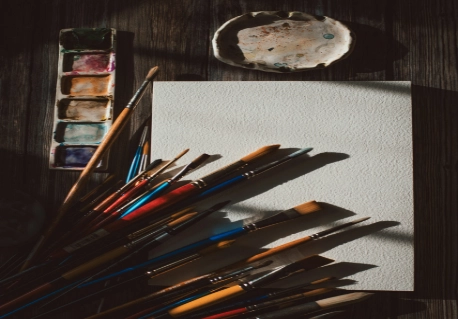
Selecting the perfect paint brush kit is not simply about acquiring numerous tools. Rather, it involves understanding the specific function of each shape. You must know how a brush feels in your hand. You also need to see the type of mark it leaves on the canvas. A proper kit assists creators in transitioning from intricate details to broad backgrounds. They can shift from smooth blending to crisp edges. This happens without wasting precious time or costly paint.
This article highlights basic applications, distinct brush functions, and actionable purchasing tips. If you wish to discover how Xin Bowen structures its product lineup, please explore our paintbrush category and visit our main site.
Why a Paint Brush Kit Matters More Than One Single Brush
One individual brush can accomplish various tasks. Yet, it cannot execute every technique perfectly. A complete paint brush kit provides the creator with the proper tool for every phase of the project. A specific brush might apply a base layer. Another brush could define a sharp line. A third brush might refine the tiniest border. This harmony transforms messy strokes into deliberate, precise artistry.
For novices, this distinction is vital because a structured kit minimizes frustration. For instructors, it allows students to grasp techniques more rapidly. For retail purchasers, it renders the item simpler to market since its purpose is clear. At Xin Bowen, we assemble brush sets intended for watercolor, acrylic, gouache, ink, and mixed media. We ensure the selection remains tailored to daily artistic requirements.
Round Brushes for Lines, Curves, and Small Shapes
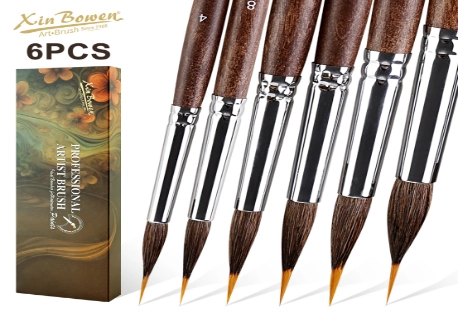
A round brush remains one of the most versatile instruments within any collection. Its sharp tip easily sketches delicate lines. Meanwhile, the wider belly retains ample paint for minor color fills and gentle sweeps. Consequently, it stands out as an excellent option for lettering, flower petals, hair strands, facial details, and sketch-style marks.
Rely on a round brush when you require:
- smooth curves
- tiny details
- precise watercolor lines
- gentle blending
- smooth shape building
A detail brush frequently serves as a smaller variation of this concept. It delivers even greater precision. This exactness proves beneficial for miniature designs, ornamental edges, and concluding highlights. If your artwork relies heavily on accuracy, a round brush and a detail brush must occupy prime spots in your kit.
Flat Brushes for Coverage and Strong Edges
A flat brush is specifically designed for wider strokes. It deposits pigment swiftly. It maintains crisp borders. Furthermore, it grants the creator enhanced command over expansive areas. When you intend to paint a solid wall, a vast sky, a section of fabric, or a neat background, this particular brush type conserves time and keeps the working area immaculate.
Flat brushes also prove highly beneficial during acrylic sessions. They can spread thicker pigment across paper or canvas with greater consistency. This trait is crucial when you employ heavy colors and desire a sleek, uniform finish instead of fragmented streaks. Additionally, a flat brush pairs beautifully with a palette knife. This combination shines when the creator seeks a layered or heavily textured effect.
Liner Brushes for Fine Work and Decorative Detail
A liner brush features an elongated, slender tip. It is crafted for delicate lines, tree branches, precise outlining, elegant script, and ornamental touches. Within many kits, this specific brush manages the concluding 10 percent of the artwork. It handles the crucial elements that render the composition entirely finished.
Utilize a liner brush for:
- branches and plant stems
- ornamental borders
- minute lettering
- hair-like strokes
- precise outlines
This brush variety is remarkably handy for creators involved in illustration, botanical art, fashion sketches, and surface embellishment. Moreover, it matches wonderfully with watercolor paper and mixed media paper. Those specific surfaces can sustain delicate marks without generating excessive friction.
Fan Brushes and Texture Tools
A fan brush distributes its bristles outward. Thus, it generates a distinct type of visual flow. It remains highly effective for painting grass, hair, animal fur, fluffy clouds, and smooth texture gradients. Furthermore, it can disrupt uniform color blocks and cause a composition to appear far more dynamic.
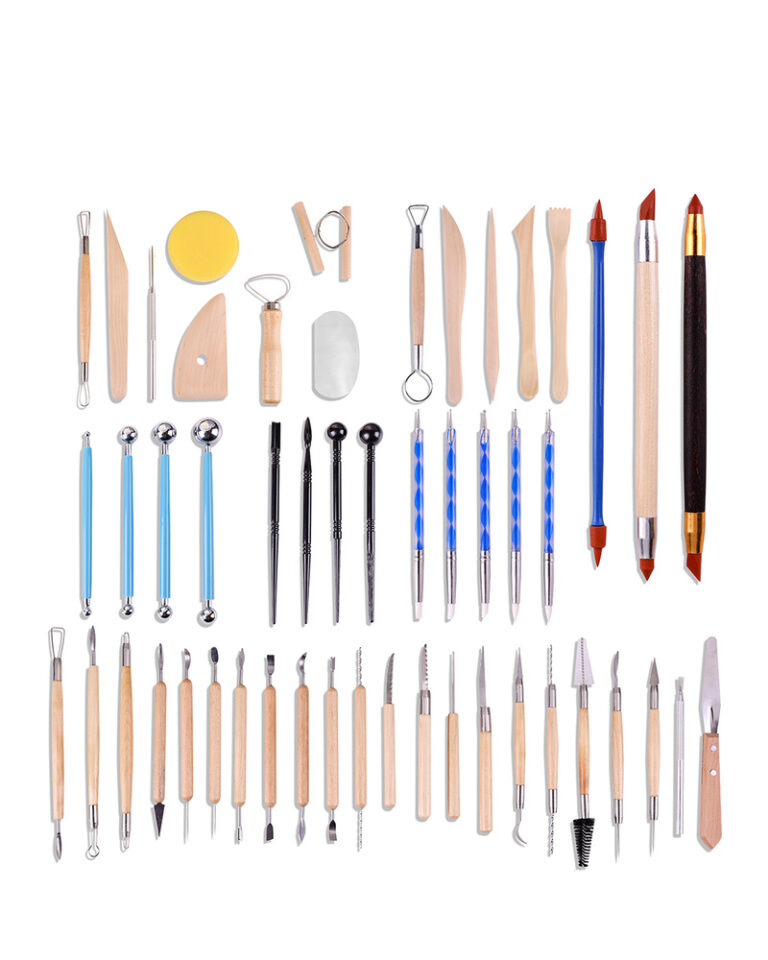
When creators desire more intense surface effects, a palette knife introduces an additional dimension of creativity. The knife firmly pushes, scrapes, and elevates the pigment. Meanwhile, the brush gently softens or blends the applied layers. Working in tandem, they assist in producing a remarkably vibrant surface. This dynamic is a primary reason why texture painting continues to gain traction across professional studios, educational classrooms, and amateur hobby sectors.
Match the Kit to the Surface and Medium
The style of the brush represents merely a portion of the equation. The chosen surface and the applied medium carry equal significance. A brush that handles flawlessly on one specific paper might act rigid or ineffective on another material. Watercolor paper, mixed media paper, woven fabric, and smooth glass all demand distinct application methods. For this reason, an intelligent paint brush kit must align with the physical material, rather than solely matching the pigment.
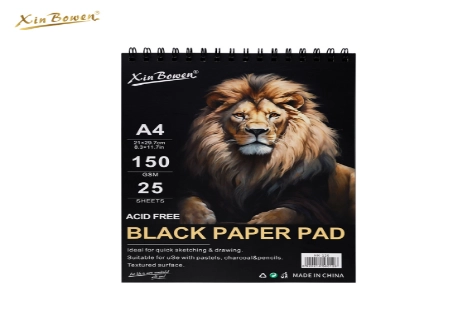
Should you wish to evaluate brush performance alongside paper selections, Xin Bowen additionally supplies a practical painting paper medium collection. This distinction is crucial. A brush behaves vastly differently on thin sketch paper compared to its performance on dense watercolor or robust mixed media stock.
Watercolor and Mixed Media Paper
Watercolor endeavors require brushes that retain moisture effectively and distribute it evenly. Pliable synthetic fibers or natural hair-based brushes can both succeed, provided the tip remains firm. A round brush frequently serves as the initial selection. A flat brush assists with broad washes and expansive sky sections. Finally, a liner brush supplies the delicate concluding strokes.
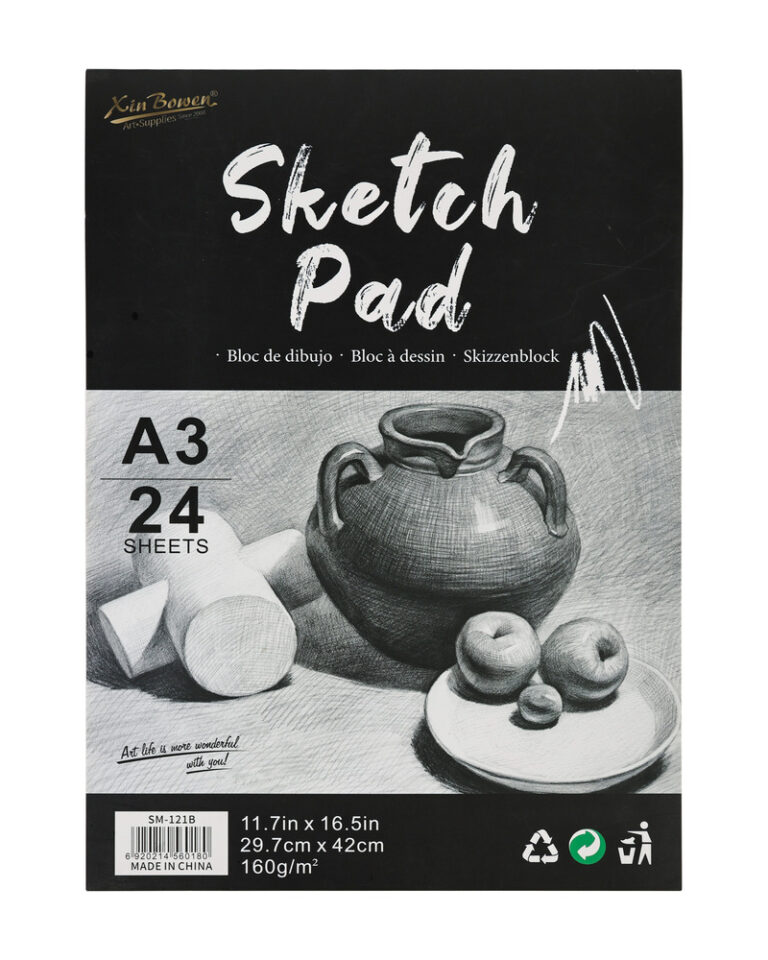
Mixed media paper grants greater artistic liberty. It readily accepts graphite pencils, liquid ink, fluid watercolor, and diluted acrylic. This versatility makes it incredibly practical for complex, layered creations. At this stage, sketching equipment for artists also integrates into the kit. The creator might initiate the process with a preliminary 2026 pencil sketch prior to introducing vibrant colors.
Fabric Painting Brush and Glass Painting Tools
A fabric painting brush ought to feel slightly more pliable than a rigid acrylic brush. However, it must still maintain a crisp, defined profile. Fabric requires a brush capable of working pigment deep into the threads without rendering the application overly abrasive. This characteristic is essential for customizing T-shirts, decorating tote bags, crafting personalized gifts, and executing classroom art projects.
Glass painting tools demand an entirely distinct method of precision. The glass surface is exceptionally slick. Consequently, the paint can glide with minimal resistance. Slender synthetic brushes, compact flat brushes, and fine detail brushes prove highly beneficial in this context. They assist in preserving crisp, clean borders. If the intended design is extremely intricate, a liner brush frequently emerges as the optimal selection.
Thick Acrylic, Pasty Color, and Texture Work
When a creator utilizes dense acrylic or heavy, pasty color, the brush must possess sufficient rigidity. It needs to shift the heavy paint without surrendering its structural integrity. A flat brush typically stands as the most functional option. A palette knife can apply the initial thick foundation. Subsequently, a fan brush can smooth the harsh borders or introduce fluid motion.
This scenario also illustrates why considering comprehensive equipment for art represents a superior purchasing strategy. A solitary brush holds value. However, a combination of a brush, a palette knife, appropriate paper, and reliable sketch tools establishes a much more thorough creative workflow. Ultimately, this comprehensive approach is exactly what numerous consumers currently seek when evaluating a complete kit.
How to Build a Practical Kit for Real Use
An effective paint brush kit must accommodate the actual methods creators employ during their sessions. It does not require every conceivable brush profile available globally. Instead, it demands the precise combination suited for the specific task, the individual user, and the chosen surface.
Here is a simple way to build a useful kit:
- Starter kit: round brush, flat brush, liner brush, detail brush
- Student kit: add fan brush, small palette knife, eraser, and 2026 pencil
- Mixed media kit: include more than one flat brush, one detail brush, and one liner brush
- Fabric kit: choose softer synthetic brushes and a firm flat brush
- Glass kit: use fine tips and clean synthetic bristles for control
For procurement tips for artists, the best rule is simple. Buy for the real use case, not for decoration. If the user paints portraits, the kit should favor detail brushes. If the user paints signs or craft boards, flat brushes matter more. If the user works in classrooms, a brush set should be easy to clean and easy to replace.
How Xin Bowen Builds Brush Kits for Buyers
At Xin Bowen, we design brush sets for watercolor, acrylic, gouache, ink, and mixed media. Our product range includes liner brushes, detail brushes, flat brushes, fan brushes, and mixed brush sets with nylon, synthetic squirrel hair, ox hair, birch wood handles, and copper ferrules. You can explore more through our products page.
We also support OEM and ODM work, which matters for wholesalers, schools, and brands that want custom kits. On our one-stop service page, buyers can see how we handle selection, sampling, packaging, production, quality checks, and delivery. That kind of support makes xinbowen a practical choice for buyers who want stable supply and a clear product plan.
When customers search for exact match brush terms, they usually want one thing: a kit that works without guesswork. That is the standard we build for.
Conclusion
A strong paint brush kit gives artists control, speed, and cleaner results. Round brushes handle lines and curves. Flat brushes cover larger areas and create sharp edges. Liner and detail brushes solve small, precise work. Fan brushes and palette knife tools bring texture and depth. The right kit also depends on the surface, whether it is watercolor paper, mixed media paper, fabric, or glass. For buyers, the smartest choice is a set that matches the real use case. For Xin Bowen, that means practical brush sets, reliable quality, and flexible support for both retail and wholesale needs.
FAQs
Q: What brush should be in a basic paint brush kit?
A: A round brush, a flat brush, and a detail brush are the best starting point.
Q: Can a fabric painting brush work on paper too?
A: Yes, but paper usually responds better to firmer and more precise brush shapes.
Q: Do I need a palette knife in a paint brush kit?
A: Yes, if you want stronger texture, layered paint, or pasty color effects.