

Many artists see their studio as a safe spot. Yet without the right body setup, it can turn into a place of pain fast. If you paint for eight hours a day as a pro or set up a new classroom for a school, how you use your art easels affects the work quality. It also impacts how long your career lasts.
Why Does a Proper Art Easel Setup Matter for Your Health?
Art drive often hides the body cost of repeated moves. Knowing how painting affects the body is key for any real maker.
The Hidden Physical Costs of Poor Painting Posture
“Artist’s back” and “painter’s neck” are not just metaphors; they are real musculoskeletal issues caused by leaning forward or tilting the head at awkward angles for extended periods. When art easels are set too low, the spine curves unnaturally. Conversely, a setup that is too high forces the shoulder to remain shrugged, leading to chronic tension and even rotator cuff issues.

How an Ergonomic Setup Enhances Your Creative Focus
When your body feels good, your thoughts can wander free. A body-fit setup makes sure your arm swings smoothly from the shoulder. It does not just use the wrist. You notice this ease most with pro tools like our Nylon+AL+Birch wood brush set (SIZE:2#,4#,6#,8#,10#, 12#). The even weight of birch handles works with a firm easel. This lets you make exact marks without body ache getting in the way.
Step-by-Step: How to Set Up Art Easels for Perfect Ergonomics?
Getting the right setup means balancing height, tilt, and space around it.
Adjusting the Height and Angle for Seated vs. Standing Sessions
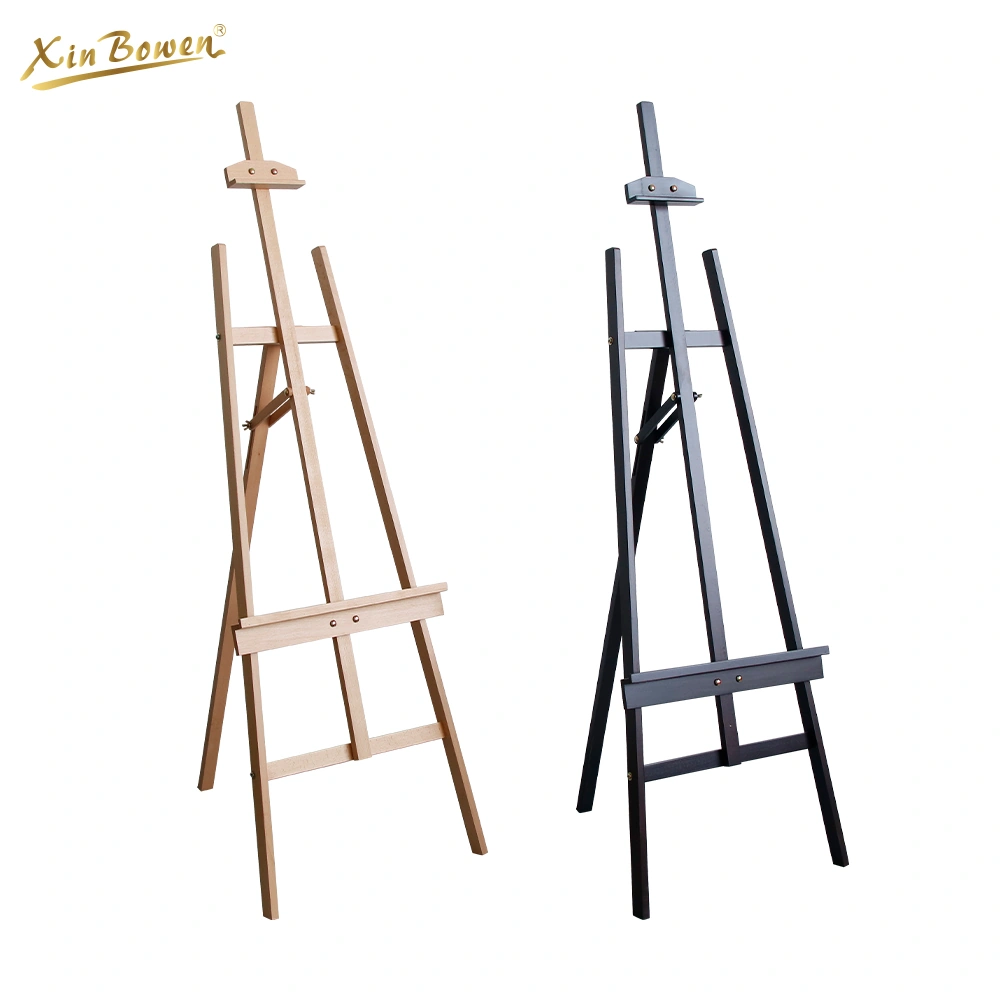
The golden rule is that the center of your canvas should be at eye level. For standing sessions, your easel should allow your elbow to be at a 90-degree angle when working on the middle of the piece. For seated work, a height-adjustable model is critical. Our HPX-X2 beech wood easel (Folding Drawer Style) is designed with this flexibility in mind, offering a maximum canvas height of 91CM and a total height range of 150-190CM. This ensures that whether you are sitting on a stool or standing, your posture remains upright.
Finding the Optimal Lighting and Studio Placement
Place your easel so light hits from the side away from your main hand. This stops shadows on your art. Also, put the easel on a flat spot. Even a small shake can spoil a small line. It makes you adjust your hold too much, which tires your hand.
What Key Features Make Art Easels Truly Comfortable?
Ease goes beyond height. It ties the maker’s routine into the tool’s build.
Built-in Storage Solutions: The Benefit of Drawers and Pallets
A cluttered workspace is a stressful one. Reaching across a room for a tube of paint breaks your flow and strains your back. We have integrated storage directly into the structure to solve this. Models like the HPX-X2 feature a customized drawer system that keeps your essential palettes and pigments within arm’s reach, allowing for a seamless transition between colors without changing your ergonomic position.
Floor Grip and Canvas Stability During Intense Brushwork
Firm hold adds to ease in quiet ways. If the easel moves during strong brush moves, the maker tightens their middle body to fix it. Pro art easels need a heavy bottom and feet that do not slip. These take the push of each mark. They give a “fixed” sense that boosts trust in the maker.
Material Matters: Which Art Easels Offer the Best Stability?
The building material does more than look good. It sets how well it cuts, shakes, and lasts.
Hardwood vs. Metal: Comparing Weight, Durability, and Aesthetics
While metal easels are lightweight and portable, they often lack the mass required to stay still under heavy canvas weight. Hardwood, particularly premium Beech and Pine, provides natural vibration dampening. This means that as you apply paint, the easel stays grounded, reducing the micro-stresses on your arm.
Why Professional Artists Prefer Beech and Pine Wood Structures
At Xin Bowen, we pick European Beech and Pine for our top models. These woods last long. They also give a touch feel that metal does not have. A Beech wood easel, like the HPX-X2B Beech Wood Easel (Folding Pallet Style), hits the right mix. It stands strong for pro studio tasks. Yet it moves well at 4.3KG to 5.5KG. Makers who want both firm hold and easy carry like it best.
How to Choose and Source the Right Art Easels for Your Needs?
Picking a maker matters as much as the easel for business buyers like art schools and sellers.
Matching the Easel Type to Your Typical Canvas Size and Weight
Think about the biggest sizes you will use. A table easel works for small drawings. But for big cloth or oil pieces, a floor H-frame or A-frame is needed. It stops the canvas from moving.
The Importance of Reliable Manufacturing and Customized Solutions
For schools and world art names, a single fit for all does not work well. At Xin Bowen, we use our full industry and trade expertise to give a total customized service. If you need customized sizes, set wood looks (oil or varnish), or special packs for world send-out, we handle all buy and make steps. Our items meet world safety rules (CPC, EN71, MSDS). This makes sure your customized buys are safe for makers of all ages.
FAQ
Q: What is the ideal height for an art easel to prevent back pain?
A: Put the middle of your canvas at eye height. When you stand, make sure the easel lets your arm keep a loose bend at the elbow. For pro setups, an easel that adjusts like the HPX-X2 lets you set height up to 190CM. You will not need to bend over your work.
Q: Is it better to sit or stand while using an art easel?
A: Each way has good points. But the main thing is to switch often. Standing gives more body reach and easy view checks. Sitting fits better for fine, long detail work. A flexible easel should work for both. For example, the folding drawer and pallet types from Xin Bowen adjust height. They fit different stools or stand levels.
Q: Which type of wood provides the best stability for art easels?
A: Beech wood ranks high for pro studio easels. It has good density, weight, and holds against bending. Pine serves as a fine, lighter choice for those who want to move it without losing the wood touch.
Q: How can I stop a wooden easel from sliding on a smooth studio floor?
A: Check that your easel has rubber or no-slip feet. If you use a moving model like the HPX-X2B on a very smooth spot, add a small mat or “easel stop” rug under it. This gives the extra hold for strong brush tasks.
Q: How do I choose an easel that can handle very large or heavy canvases?
A: Check the “maximum canvas height” and “weight hold” details. For big work, an H-frame easel with a wide bottom stands firmer than a three-leg type. Good wooden easels with a strong middle post hold canvases up to 91CM or more. They keep the art still while you paint.