

A harsh edge might leave a delicate flower looking entirely rigid. A messy blend might destroy the crisp atmosphere of a portrait. For numerous creators, the problem goes beyond just the pigment. The specific tool they hold is equally crucial. A round paint brush provides creators with a straightforward method to direct shades. It helps them blur harsh lines. They can also form tiny details while maintaining total command.
At Xin Bowen, we specialize in premium art materials, painting brushes, and sketch watercolor products. We also supply pigments alongside various creative tools. Our catalog features distinct brush series. This piece examines how a round paint brush elevates blending results. It also explains how creators can handle this item with superior precision.
Why Does a Round Paint Brush Work Well for Soft Transitions?
Before picking an implement, one should consider how its profile impacts motion. Flat brushes excel at wide sweeps and crisp borders. Fan brushes prove handy for adding texture and doing light mixes. Liner brushes exist specifically for drawing skinny lines. A round paint brush occupies the middle ground among these options. It remains nimble enough for intricate tasks. Yet, it stays thick enough for minor washes and seamless fades.
The Pointed Tip Builds Clean Direction
The sharp point stands out as an incredibly valuable feature of a round paint brush. It allows the user to drop pigment precisely in the desired spot. This accuracy matters deeply within any fading zone. Applying excess pigment in an incorrect location will cause unwanted stains. It might also form strange blooms or blotchy sections.
The Brush Belly Holds Paint and Water
The thick middle section of a round paint brush retains fluid. This capacity proves vital for achieving a flawless blend. The tool requires sufficient dampness to drag pigment across the canvas. If the bristles dry out prematurely, the fade will appear rough. Conversely, if it carries excess moisture without proper management, the pigment will inevitably pool.
A properly crafted watercolor brush must absorb liquid effectively. It should then discharge that fluid at a consistent pace. Regarding the watercolor brush side, this equilibrium remains exceptionally critical. Watercolor fades rely heavily on careful timing, exact dampness, and delicate borders. The tool must transport adequate fluid to mix the shades. However, it absolutely must not leak or scatter the pigment too intensely.
Flexible Bristles Help Control Pressure
A quality round paint brush must flex easily. Afterward, it should snap back to its original form. This natural bounce assists creators in shifting from a gentle touch to a firmer press. Furthermore, it enhances overall handling. This proves useful while rendering smooth gradients, deep shadows, and realistic skin tones. It also aids in depicting fluffy clouds and draped fabric folds.
How Can Artists Use a Round Paint Brush for Better Paint Transitions?
Blending outcomes get better when creators handle their tools using deliberate steps. The objective is never to push forcefully. One should not apply extra liquid randomly. Excellent results emerge from balancing the pigment load carefully. One must also match the canvas dampness with steady hand motions.
Start with the Right Moisture Level
Dampness forms the foundation for numerous color fades. If the working area remains overly soaked, the pigment will likely travel excessively. If the area stays completely parched, the tool will deposit harsh lines. A round paint brush assists in evaluating this delicate balance. As the tip meets the paper or canvas, the stroke must glide smoothly. It should never create a puddle.
Regarding watercolor, slightly wet paper encourages delicate borders. When handling acrylic, a damp tool assists in diluting the pigment. This action produces a much smoother fade. With gouache, a measured volume of liquid can reactivate the dried border. This allows just enough flexibility to achieve a proper mix.
Use Light Pressure First
Numerous blending issues stem from applying excessive force. Pushing the tool too aggressively causes the hairs to splay apart. Consequently, the resulting stroke turns jagged. The pigment will then spread in an irregular manner. A round paint brush performs optimally when the user starts with a gentle touch. They should only increase the force when needed.
A gentle touch maintains a crisp point. A moderate press permits the thick middle to coat a larger area. Regulating this force facilitates flawless layering. This technique proves highly beneficial when rendering delicate borders around clouds. It also works perfectly for water reflections, delicate flower petals, and bright skin highlights.
Move from Dark to Light Carefully
Fades frequently look poor when intense pigment gets dragged deeply into a bright zone. A round paint brush manages this risk effectively if the creator proceeds at a slow pace. Begin by applying the deeper shade. Next, wash the tool thoroughly. Dab it dry, and then gently drag a tiny portion of the pigment outward.
This tactic proves highly valuable during watercolor brush tasks because the medium remains translucent. Once a deep mark travels excessively, fixing it becomes quite difficult. During acrylic brush applications, following this identical guideline prevents heavy, chalky mixtures. Wash the tool regularly. Furthermore, ensure every single stroke stays gentle.
Which Painting Styles Benefit Most from a Round Paint Brush?
A round paint brush is never restricted to a single artistic method. Its unique profile renders it practical for various creative demands. This versatility explains why art academies and private studios favor it. Online merchants and bulk distributors also frequently feature round brushes. They place them within both beginner kits and advanced professional collections.
Watercolor Illustration
Watercolor requires an instrument capable of retaining fluid while maintaining a sharp tip. During watercolor illustration, creators frequently alternate between broad washes and microscopic elements. A round paint brush accommodates both actions perfectly. It constructs delicate skies and faint shadows effortlessly. It easily forms leaf patterns, intricate flower centers, and crisp outlines.
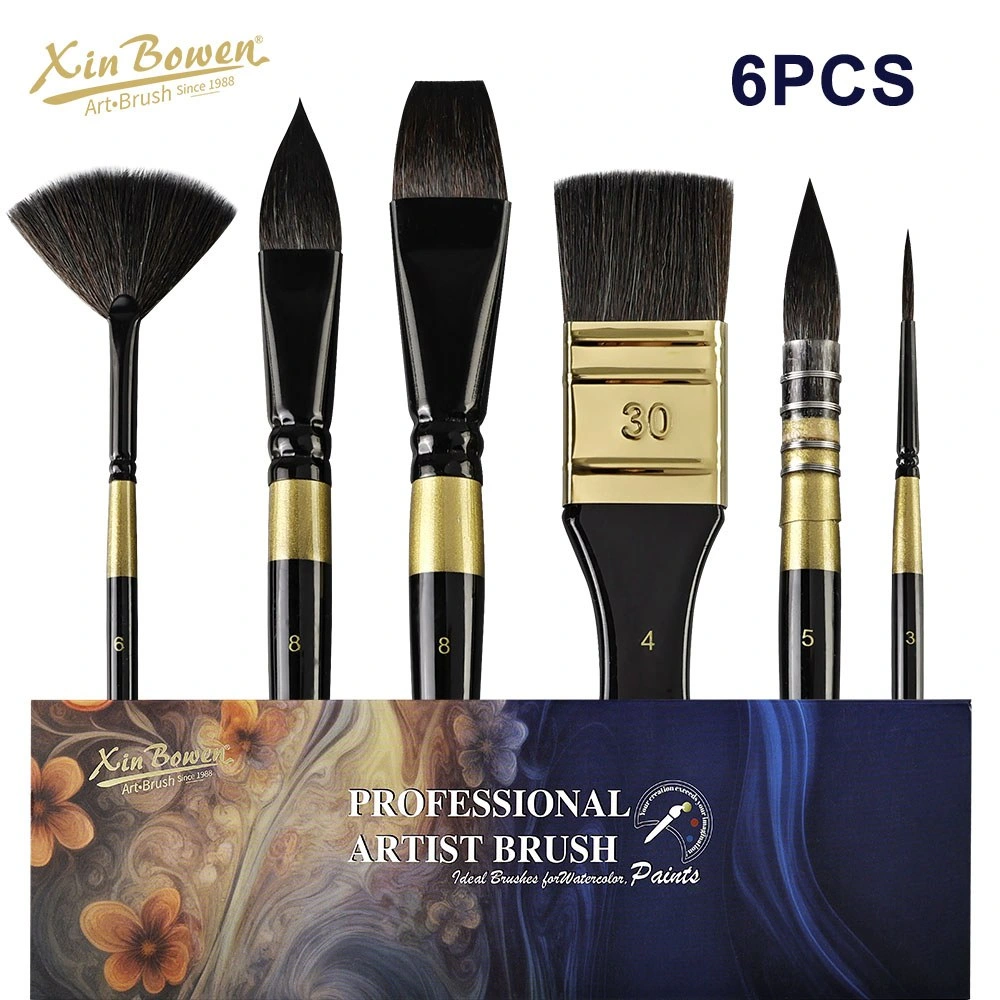
Xin Bowen supplies premium brush products crafted from synthetic squirrel hair and durable nylon. They feature sturdy birch wood handles alongside secure metal ferrules. Within our extensive brush series, we carefully select these specific materials. They ensure a consistent pigment discharge and excellent fluid retention. They also provide great springiness and a pleasant hold. Our artist paint brush collection contains various profiles. These suit seamless blending, precise detailing, wide washes, and heavy strokes.
Acrylic Painting
Acrylic pigment hardens rapidly. Therefore, blending tasks demand swift execution. A round paint brush aids creators in blurring minor borders before the medium sets completely. It also proves highly effective for transparent glazing and initial underpainting. Furthermore, it excels at delicate floral marks and tiny highlight spots.
Regarding proper acrylic brush applications, the hairs must possess enough stiffness to push heavy pigment. They must also regain their original form following multiple uses. An instrument that drops its sharp tip prematurely complicates intricate tasks. It also diminishes overall precision. For this exact reason, manufacturers frequently utilize nylon and blended synthetic fibers within acrylic brush items.
Gouache and Mixed Media
Gouache occupies a space between watercolor and acrylic in numerous aspects. It remains gentle and water-soluble. However, it delivers much stronger opacity. A round paint brush assists creators in establishing delicate borders with gouache. It achieves this without damaging the underlying paper fibers.
During mixed media projects, one might utilize the exact same tool for watercolor, gouache, ink, or acrylic elements. A round paint brush featuring excellent structural memory helps creators maintain crisp lines. It also ensures seamless fades across entirely different mediums.
Xin Bowen delivers top-tier brush products equipped with solid birch wood handles. They feature nylon or specialized synthetic hairs. We provide various packaging solutions. Our products encompass comprehensive brush sets and reliable painting tools. We offer vibrant pigments, drawing kits, and essential art materials. These cater perfectly to individual creative endeavors and bulk B2B distribution.
Conclusion
A round paint brush significantly elevates blending outcomes. It provides creators with a unique combination of a sharp tip, fluid capacity, gentleness, and precision. For corporate B2B purchasers, art academies, private studios, and retail shops, round brushes represent highly practical merchandise. They accommodate complete novices and seasoned professionals alike. Xin Bowen fulfills this market demand through an extensive art materials catalog. This includes premium artist paint brush items, complete watercolor brush kits, and dependable painting tools. We also provide comprehensive OEM/ODM services. Selecting the proper implement ensures that every single mark feels incredibly steady, organic, and full of expression.
FAQs
Q: Is a round paint brush good for watercolor transitions?
A: Yes. It retains fluid perfectly and assists in forming delicate borders.
Q: Can a round paint brush be used with acrylic paint?
A: Yes. A sturdy acrylic brush allows you to blur minor borders rapidly.
Q: What brush size is best for smooth blending?
A: Moderate round dimensions work optimally for the majority of color fades.