


Picking the correct painting tool can shift the look, pace, and expense of a job. Lots of artists and home crafters grab normal brushes right away. They do this because these items feel known. Still, foam brush painting is now a handy option. People use it for flat layers, hobby crafts, clear coats, and lots of acrylic paint tasks.
A foam paint brush features a gentle, spongy foam top rather than loose hairs. This basic build lets paint flow smoothly over level areas. It can cut down on clear brush streaks. It also stops stray hairs from falling out. Plus, it saves time during cleanup. Normal brushes still matter for thin lines and rough marks. Yet, they might not be the top pick. This is true when you want a neat and flat paint surface.
This manual looks at both items. It helps creators, craft shops, teachers, sellers, and home users. They can pick the proper brush for every task.
Why Foam Brush Painting Is Gaining Attention?
Home painting keeps expanding. This includes room styling, classroom tasks, custom gifts, furniture fixes, and mixed art. Buyers today desire tools that feel simple to guide. They want fast results. The items must also fit different materials. People want to waste less paint. They hope to get nice finishes without deep painting skills.
Foam brush painting meets many of these demands. A foam end can hold a good amount of liquid. It then puts it down in a steady film. This tool shines with acrylic pastes, wood stains, clear sealers, varnishes, and many water-based colors.
At Xin Bowen, we offer a wide variety of painting products for art, hobby, school, and store sectors. Our lineup features acrylic, oil, water-based, cloth, glass, and pouring items. This lets shoppers pair the tool with the proper liquid.
Foam Paint Brush and Traditional Brush: The Basic Difference
Before we check how they work, we should see how makers build these two tools. Their parts change how they grab paint. The parts also alter how they drop paint, leave marks, wash up, and last over time.
A foam paint brush mostly features a carved block of airy foam. This foam connects to a plastic or wood grip. Standard brushes rely on real or fake hairs. A metal band holds these hairs tightly. Both layouts bring benefits. However, they lead to distinct finishes.
How a Foam Paint Brush Applies Paint
The foam face pulls color into tiny open spaces. A person pushes lightly on the tool. Then, the liquid shifts from the foam to the project area. The top lacks single hairs. Because of this, it leaves fewer narrow streaks while working.
This fact makes foam brush painting very useful for:
- Flat wooden panels
- Canvas backgrounds
- Decorative boxes
- Signs and lettering bases
- Furniture edges
- Varnish and protective coatings
- Stencils and simple craft shapes
- Acrylic medium application
The worker must not push too firmly. Hard pushing can squeeze out excess paint. It might form air pockets. It can also ruin the foam tip.
How Traditional Brushes Apply Paint
Standard brushes trap color between many single hairs. Their soft ends can trace curves. They fit into tight spots. They also form careful art marks. These items are frequently the ideal gear for fine painting. They work well for mixing, borders, and bold patterns.
Still, loose hairs can cause brush streaks. This happens when the liquid is dense. It occurs on big areas. It also happens if the worker paints over a wet layer again and again. Cheap normal brushes might drop hairs into the wet coat as well.
Major Advantages of Foam Brush Painting
The value of foam brush painting shows clearly in projects that need wide and even coverage instead of detailed artistic work. For new users and those who handle large volumes, these benefits can shorten working time and limit finishing issues.
A Smoother Finish With Fewer Brush Marks
One main advantage appears in the smooth paint finish. A foam head presents a continuous surface. Therefore it avoids splitting the paint into visible bristle lines. On wood, canvas board, cardboard, and similar materials, this produces a clean layer with reduced brush marks.
The final result still relies on paint thickness and proper technique. Users should apply thin coats. They should move in one direction. They must also stop brushing once the layer starts to dry. Reworking partly dried acrylic paint can create ridges with any applicator.
For smooth DIY painting, foam brushes prove especially useful. They work well when painters apply a base coat before they add details with a traditional brush.
Fast Coverage on Flat Surfaces
A foam paint brush can cover small and medium flat areas in less time. Its wide edge spreads paint across the surface. It does this without many overlapping strokes. This approach helps in workshops, classroom projects, craft production, and product sampling.
Faster application also supports work with fast-drying acrylic paint. The painter can finish a section before the edges begin to set. This step lowers the chance of uneven lap lines.
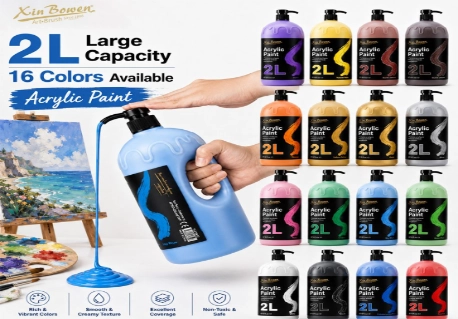
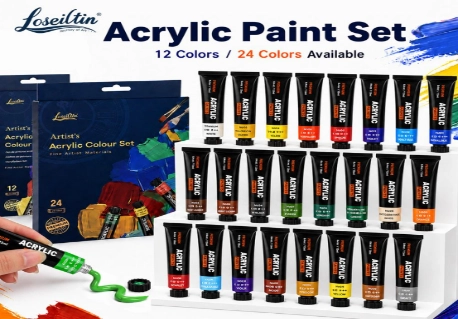
Xin Bowen offers acrylic paint products for canvas, wood, paper, and DIY art. Pairing the right acrylic paint consistency with a foam applicator can simplify broad coating tasks. Both beginners and experienced craft users benefit from this combination.
No Loose Bristles in the Coating
Traditional brushes can lose hairs from time to time. This occurs especially after repeated use or incomplete cleaning. Removing a bristle from wet paint may disturb the surface. It can also leave a visible mark.
Foam brush painting avoids this issue completely. The applicator contains no loose hairs. This feature helps when painters apply clear mediums, gloss coatings, matte mediums, and sealers. In these cases, small defects become easy to notice.
The foam itself still requires inspection before each use. Torn, dry, or chemically damaged foam may leave particles behind. Users should replace the brush as soon as the head begins to split.
Simple Cleanup and Practical Disposal
Cleaning traditional brushes often demands water, soap, solvent, and several minutes of effort. Paint trapped near the ferrule can harden. This reduces the life of the brush.
A foam paint brush usually rinses with less effort after water-based paint. For short and low-cost projects, it can serve as a disposable tool. This option benefits classrooms, public workshops, testing areas, and production environments where cleaning time carries high costs.
Disposal must remain responsible. A usable foam brush should not be discarded after only a few strokes. For improved material control, users can assign one brush to each color family. They should rinse water-based coatings before the paint dries. They can also store the brush properly between short work sessions.
Controlled Use of Paint and Mediums
Foam absorbs and releases paint in a predictable manner when loaded correctly. This process limits dripping. It also decreases the amount of paint trapped deep inside a bristle bundle.
For best results:
- Dip only the lower part of the foam head.
- Press lightly against the tray edge.
- Apply thin, even coats.
- Reload before the foam becomes nearly dry.
- Avoid repeated passes over drying paint.
Xin Bowen offers acrylic flow, matte, and gloss medium products supplied with sponge brushes. These combinations support coating, decorative work, texture projects, and surface finishing. Buyers can explore our full product collection to compare paints, brushes, surfaces, and supporting tools.
When Traditional Brushes Are Still Better
Foam brush painting offers clear value. However, it cannot replace every traditional brush. A professional result often comes from using both tools at different stages.
Traditional brushes are generally better for:
- Fine lines and outlines
- Small corners and narrow gaps
- Curved or uneven surfaces
- Detailed illustrations
- Controlled blending
- Dry-brush textures
- Thick impasto effects
- Expressive visible strokes
A round brush can form precise lines. A filbert creates soft edges and curved marks. Flat bristle brushes can also push thicker paint more effectively than foam. For these purposes, visible brush marks may form part of the artistic style rather than a defect.
The practical choice is not always foam versus bristles. A painter can use a foam paint brush for the smooth background. Then the painter can switch to traditional brushes for details, shading, and texture.
Which Paints Work Best With Foam Brushes?
Foam brushes perform best with paints and coatings that move through the foam without quickly breaking down the material. Water-based products are usually the easiest to handle.
Good applications include:
- Acrylic paint
- Acrylic mediums
- Water-based varnish
- Craft paint
- Wood stain
- Decoupage medium
- Fabric paint for broad areas
- Primer on small surfaces
Oil-based products may also be applied with some foam brushes. Compatibility should be checked first. Strong solvents can weaken certain foam materials. The user should test the applicator on a small area before starting a large project.
Our paint range includes products for different surfaces, color effects, and user levels. We recommend matching the paint thickness, drying speed, and surface type with the applicator. This approach works better than using one brush for every coating.
How to Get Better Results With Foam Brush Painting
A good tool cannot correct poor surface preparation. Dust, grease, loose fibers, and old peeling paint can still cause an uneven finish. Before painting, clean the surface and allow it to dry fully.
Follow these steps for a smoother result:
- Stir the paint slowly to avoid adding air bubbles.
- Pour a small amount into a clean tray.
- Load the foam without fully soaking the handle area.
- Apply light pressure in long, consistent passes.
- Keep a wet edge while covering the surface.
- Allow the first coat to dry before adding another.
- Replace the brush if the foam becomes soft or torn.
For stencils, use a gentle dabbing motion rather than a sweeping stroke. Remove excess paint first. An overloaded foam brush can push paint under the stencil edge.
Choosing Foam Brushes for Retail or Custom Projects
Retailers and private-label buyers should consider more than the lowest unit cost. Foam density, head shape, handle strength, adhesive quality, packaging, and paint compatibility all affect the customer experience.
A foam that is too soft may collapse during use. A very open structure can release paint too quickly. A dense foam may not pick up enough coating. Packaging must also protect the foam from crushing during storage and shipping.
At Xin Bowen, we provide one-stop art material services covering product selection, set development, design support, production, quality checks, and customized packaging. We can help customers combine paint, foam applicators, traditional brushes, palettes, canvas, and other tools into practical art or DIY painting sets.
Conclusion
Foam brush painting is a strong choice when a project requires fast coverage, simple handling, and a smooth paint finish with fewer brush marks. It works particularly well for acrylic paint, craft coatings, mediums, varnishes, flat wood, canvas backgrounds, and stencil work. Traditional brushes remain more suitable for fine detail, curved surfaces, blending, and expressive texture.
The most effective approach is to select the tool according to the surface and desired result. Use a foam paint brush for clean base layers and broad coatings. Then use traditional brushes for detailed or artistic work. This combined method can save time. It can reduce finishing problems. It also gives both beginners and professionals greater control over the final appearance.
FAQs
Q: Can a foam paint brush be reused?
A: Yes. Rinse it before water-based paint dries and replace it when the foam tears.
Q: Is foam brush painting suitable for 120 ml acrylic medium?
A: Yes. It provides thin, even coverage for 120 ml acrylic mediums and surface coatings.
Q: Does a foam brush completely prevent brush marks?
A: It greatly reduces brush marks, but paint thickness, pressure, and drying time still affect the finish.