

Selecting the right watercolor paper texture directly dictates how water moves and how pigments settle on the page. Finding a reliable cold-press watercolor pad often makes the difference between a muddy wash and a vibrant, successful painting. We offer premium art materials backed by more than 15 years of manufacturing experience, keeping our focus firmly on what artists actually need in the studio. This guide provides objective details on how different paper surfaces perform, helping you select the precise tool to support your specific painting style.
How Watercolor Paper Texture Defines Your Final Artwork
The manufacturing process establishes the physical tooth of the paper. This surface structure acts as a physical barrier, altering the speed at which washes dry and changing how pigments blend together.
The Manufacturing Process Behind Surface Tooth
During production, heavy rollers press the wet pulp into sheets. The temperature and pressure of these rollers dictate the final texture. Cold pressing leaves small dimples and grooves intact, while hot pressing flattens the fibers entirely. Grasping this mechanical difference helps artists predict how their brushes will react on the page.
Controlling Moisture and Pigment Absorption
Surface tooth works alongside chemical sizing to control moisture. Sizing keeps the paint from sinking completely into the paper fibers, keeping colors bright. Deep physical grooves trap small pools of water, giving artists more time to manipulate the wash before it dries.
Hot Press Characteristics: Smooth Surfaces and Precise Details
Moving to the smoothest option available, hot-press sheets undergo extreme heat and pressure during production. This creates a flat surface designed for highly specific applications that require sharp lines.
Ideal Applications for Botanical and Ink Art
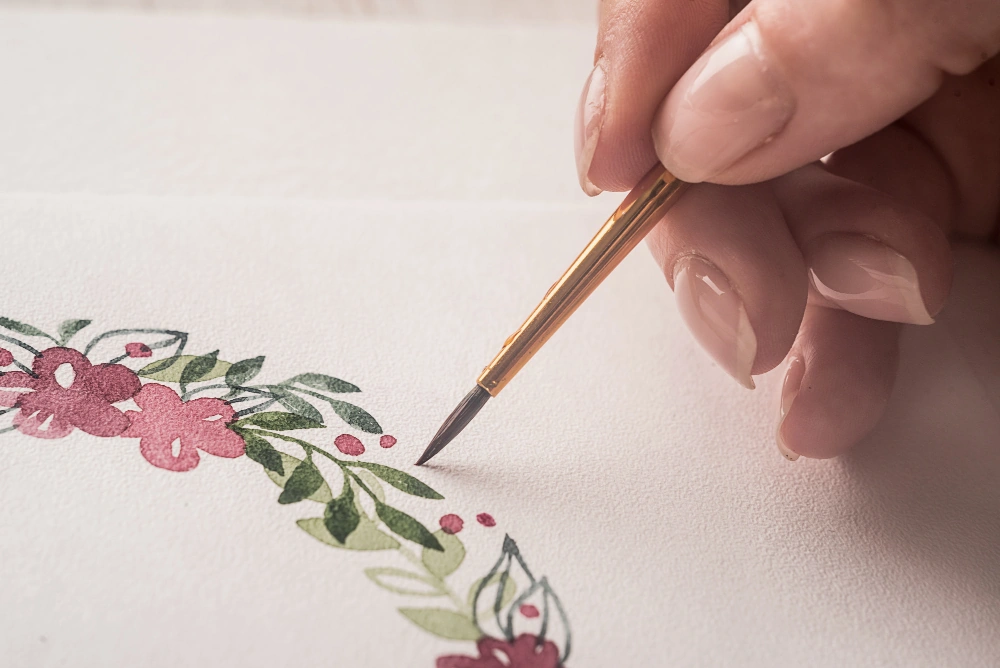
A smooth watercolor paper finish excels in botanical illustrations, precise portraiture, and mixed media ink work. Pens and fine brushes glide over the surface without catching on tiny bumps, keeping ink lines crisp and highly detailed. It also works beautifully for art intended for digital scanning.
Managing Fast Drying Times Without Streaks
Because hot press sheets lack deep grooves to hold water, the surface dries rapidly. Work quickly and try to mix your colors fully before your brush hits the page. Applying steady, even washes prevents hard edges or streaks from forming on this flat material.
Cold Press Characteristics: The Best Balance and Beginner Choice
Stepping away from extreme smoothness, the moderate tooth of cold-press materials makes it the most popular choice across global art studios. It provides an excellent middle ground for various techniques.
Why Moderate Texture Forgives Brush Mistakes
The slight dimples in cold-press paper hold moisture just long enough to allow for seamless color blending. It handles lifting and scrubbing well, giving beginners the freedom to correct small errors with a damp brush without ruining the delicate paper fibers.
A Reliable Tool for Daily Practice
For daily sketches, color swatching, or plein air painting, having a portable book is highly practical. Consider picking up the 300gsm 15 Sheets Watercolor Drawing Pad Mixed Cotton A5. Its mixed cotton blend gives great absorbency, and the sturdy 300gsm weight keeps the pages flat during wet washes without requiring extra stretching.
Rough Characteristics: Maximum Absorption and Textural Expression
On the opposite end of the spectrum, paper dried without heavy pressing offers intense tactile feedback. This highly textured material demands confident brushwork and supports thick medium applications.
Creating Depth with Dry-Brush Techniques
A rough watercolor paper absorbs massive amounts of water and captures pigment beautifully. Dragging a semi-dry brush across it leaves paint only on the high points, naturally replicating the look of rough stone or sparkling water.
Scaling Your Artwork with Larger Formats
When painting expansive landscapes or broad abstract washes, a larger surface area helps you take full advantage of the heavy texture. Try using the 300gsm 15 Sheets Watercolor Drawing Pad Mixed Cotton A4 to expand your composition. The larger A4 size provides the room needed for sweeping arm movements while retaining the professional performance of the mixed cotton blend.
-1.webp)
Choosing the Right Pad for Your Specific Painting Style
Evaluating these distinct textures allows artists to match their physical tools to their intended visual outcomes. Your choice ultimately depends on your subject matter and budget.
Comparing Hot Press vs Cold Press for Your Needs
Review this brief comparison to guide your next studio purchase. Choosing between hot press and cold press comes down to speed and detail. Hot press dries fast and supports sharp pen lines. Cold press dries slower, making it the superior choice for soft, gradual color gradients and traditional landscape washes.
Cost-Effective Options for High-Volume Practice
Academic studies and high-volume sketching require reliable but affordable materials. Try keeping the 200gsm 30 Sheets Watercolor Drawing Pad Pure Wood Pulp A5 in your studio. Pure wood pulp paper delivers bright color payoff and dries quickly, making this 200gsm pad a highly efficient choice for quick color drafts and daily concept art.
Summary
Selecting the ideal art surface is an objective process of matching material properties to your creative goals. We focus heavily on producing items that meet strict international safety and performance standards. Through our independent factory operations and rigorous quality inspection team, Xin Bowen delivers integrated industry solutions for creators worldwide. Our 15 years of corporate history allow us to maintain high consistency in every batch, from premium easels to professional paper products, helping artists achieve their best work without equipment failure.
FAQ
Q: What makes the watercolor paper texture so important for new students?
A: The watercolor paper texture acts as a physical barrier that slows down water movement across the page. This gives new students extra time to blend colors and fix small mistakes before the paint completely sets.
Q: How does a cold-press watercolor pad differ from loose paper sheets?
A: A cold-press watercolor pad binds multiple sheets together, keeping the pages flat and organized while you paint. This makes it highly portable for travel, whereas loose sheets often require manual taping to a wooden board to stop warping.
Q: When evaluating hot press vs cold press, which surface dries faster?
A: In the hot press vs cold press comparison, the hot press surface dries significantly faster. Because it lacks deep grooves to hold small pools of water, evaporation happens quickly, making it ideal for artists who work fast.
Q: How does the watercolor paper finish protect my artwork over the years?
A: A professional watercolor paper finish involves an acid-free manufacturing process. Acid-free materials prevent the paper from turning yellow or becoming brittle as it ages, keeping your artwork gallery-ready for decades.
Q: What specific brush techniques work best on rough watercolor paper?
A: The dry-brush technique excels on rough watercolor paper. By dragging a brush with very little water across the textured surface, the pigment only touches the raised bumps, perfectly replicating natural textures like tree bark or rocky cliffs.