

The Evolution of the Artist Palette in 2026
Why the Limited Palette is Making a Comeback
Simplification is becoming the ultimate sophistication in the art world as we move towards 2026. Many professional artists are rediscovering that restricting their color choices actually expands their creative potential. By working with a limited palette—often just three primaries plus white and a dark neutral—you force yourself to understand the intrinsic relationships between hues. This constraint eliminates the paralysis of choice found in massive paint sets and ensures a natural color harmony throughout the artwork. Mastering a limited range allows you to predict mixing results with mathematical precision, a skill that separates the novice from the master.
Integrating Digital Color Theory with Traditional Mixing
Today’s makers are closing the divide between screen work and real painting more and more. The strong color ideas from computer programs. These cover fullness, light level, and color codes. Now, they shape how old-style painters set up their real color boards. Painters use pads to try out color plans before touching any paint. This cuts down on waste and builds confidence. We see that this mixed method pushes a sharper way to handle the artist’s palette. In it, each blend gets planned out, not just hoped for.
Mastering Advanced Color Mixing on Your Palette
Creating Depth Using Chromatic Blacks Instead of Tube Black
Sticking to ready black from a tube tends to make flat, dull dark spots that drain life from a picture. A better method means blending “chromatic blacks.” These are full, deep shadows made by pairing opposite colors. For example, Ultramarine Blue with Burnt Umber. Or Phthalo Green with Alizarin Crimson. Such blends keep a light color lean. It can be warm or cool. This plays well with the bright parts in your setup. The way builds air-like layers and a see-through feel. Standard lamp, black or ivory black, cannot match that.
Managing Color Bias and Temperature for Vibrant Mixtures
Dull colors kill brightness. They happen when you mix warm and cool types of the same shade by mistake. Grasping color lean matters a lot. Take a “cool” red like Alizarin. Mix it with a “warm” blue like Ultramarine. You get a flat purple. That is because the yellow leans toward the blue, which blocks the purple. To get bright, strong second colors, pair paints that pull toward each other on the color circle.
Selecting the Best Artist Palette Material for Your Medium
The Benefits of a Wooden Palette for Oil Painting
Old oil painters have picked wooden boards for years. They like the handy hold and even-toned face. A cared-for wood top gives a plain backdrop. It helps you check paint strength better than a bright white one. Beech wood stands out for its close lines and fight against bending over time. With a top wood board, oil paint slides easily. It does not soak in fast. So you get more time to blend. This pick ties the now painter to the past greats. They knew tools were like extra fingers.
Modern Durability: Aluminum and Plastic Palettes
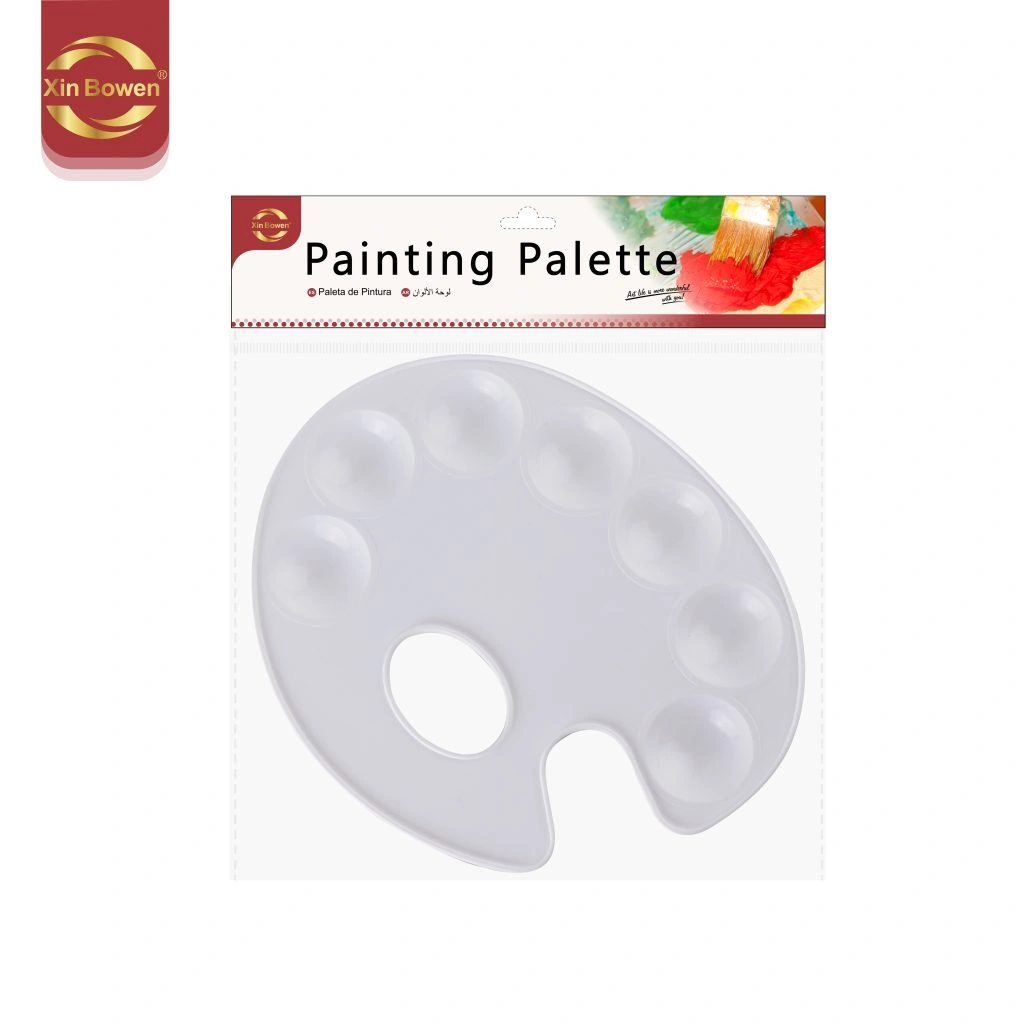
For artists who require surfaces that are exceptionally easy to clean and maintain, modern materials offer significant advantages. The Xin Bowen Rectangle Shape Aluminum Palettes are an excellent choice for studio professionals. Unlike porous materials, aluminum provides a sleek, non-absorbent surface that ensures 100% of your pigment is used rather than soaked up. It is incredibly durable and can be cleaned with a simple wipe, making it ideal for acrylics and heavy-body oils. Additionally, for those preferring a classic form factor with lightweight properties, the Xin Bowen Oval Flat Shape Oil Painting Palette offers the traditional ergonomic thumb hole design in a sturdy, easy-to-maintain material, perfect for long painting sessions.
Essential Tools to Optimize Your Palette Workflow
Choosing High-Performance Brushes for Precise Color Loading
Your color board works only as well as the brush you use to pick up the hue. A too-bendy brush might not hold thick paint. A too-hard one could scratch your mix spot. We suggest the Xin Bowen Set of 6 Synthetic Artist Brushes. They have tough flat shapes from size 2 to 12. These fake hairs are built to take mixed rub on a board. They keep a fine point for putting on paint. The birch wood grip balances well. So you can blend for a long time without tiring your hand. That holds for soft color shifts.
The Importance of a Sturdy Easel for Studio Organization
A messy workroom muddies thoughts. A firm stand is the base of a pro setup. Putting your board on a shaky table or holding it too long cuts focus. The Xin Bowen HPX-Z11 Beech Wood Easel fixes that. It gives a solid base for your picture and extras. Its tunable height and strong beech wood build let you set work at eye height. This cut pulls on your body. Adding a pro stand to your flow frees your hands. So you can give your full mind to the fine skill of color blending.
Why Xin Bowen is Your Strategic Partner for Art Supplies
15 Years of Expertise in Brush and Easel Manufacturing
For more than ten years plus five, we have put heart into making fine art stuff. Our full field know-how lets us watch all the steps. From getting top beech wood to building lasting fake hair. As our own mark with joined field and sales skills, we get the small wants of skilled painters. We do not just move goods. We hand over base tools that help makers turn ideas real.
Commitment to Global Safety Standards and Customization
Safety and rule-following mean everything in the world of art trade. We take pride that our goods meet hard world checks. These include CPC, EN71, and MSDS papers. This promise makes sure our custom fixes. They work for schools or shop marks. And they stay safe for all ages. We give wide OEM and ODM help. It lets partners build customized art sets that show their own mark style. All while leaning on our tested make quality.
FAQ
Q: What is the best palette material for preventing paint from drying out?
A: For acrylics, a “stay-wet” palette system or a non-porous surface like glass or treated paper is ideal. Our tear-off paper palettes are designed with a special coating that gives you more working time compared to standard paper, while glass allows for easy misting to keep paints moist.
Q: How do I choose the right brush size for color mixing?
A: It is generally better to use a slightly larger flat brush or a palette knife for mixing on the palette itself to save your detail brushes from wear. A size 6 or 8 flat brush offers enough surface area to blend colors thoroughly without trapping paint near the ferrule.
Q: Why do professional artists prefer beech wood for easels?
A: Beech wood is a hardwood known for its density, straight grain, and impact resistance. Unlike softer woods like pine, beech is less likely to dent or warp under the weight of large canvases, making it the gold standard for durable, long-lasting studio equipment.
Q: Can I use the same brushes for oil and acrylic painting?
A: While possible, it is not recommended. Oil paints require solvents that can degrade the glues used in some brushes, while acrylics are water-based. It is best to keep separate sets. Such as synthetic flats for acrylics and natural hog bristle or specialized synthetics for oils. This way, they last longer.
Q: How can I customize an art kit for my art school?
A: School places often need set mixes of tools. You can team with a maker to form customized kits. These hold the right brush sizes, board types, and stand models for your lessons. So every learner gets the proper quality tools from the start.