
Picking the proper art paint brush marks the initial key move for any new artist. It helps turn ideas into actual work. The wide range of forms, lengths, and fabrics can confuse newcomers and buyers alike. This overview explains the basic parts and kinds of brushes. It aims to guide you in smart choices. You might be filling a school room or putting together your own supplies.
Understanding the Anatomy of an Art Paint Brush
The Bristles (Tuft): Natural vs. Synthetic Composition
A paintbrush’s work relies mostly on its bristle makeup, called the tuft. New users often find it hard to pick between real hair, which grabs more color, and fake strands, which last longer and stay exact. At Xin Bowen, we carefully pick fabrics for our Nylon Hair Wooden Handle Brush Sets to match the bounce and give of real hair. At the same time, they offer the staying power needed in learning spots. Knowing this difference matters. The bristle kind sets how well the brush works with various paints, like watercolors or thick oils.
The Ferrule: Ensuring Durability and Safety
A top ferrule stands as the quiet star of a brush that holds up over time. It firmly links the bristles to the grip to stop hairs from falling out in paint time. We use fine aluminum (AL) ferrules in our build steps. They resist rust and get tightly squeezed for safety and steadiness. For sellers and shops, suggesting brushes with strong metal ferrules cuts down on return issues about loose strands or shaky grips.
The Handle: Grip Comfort and Material Choices
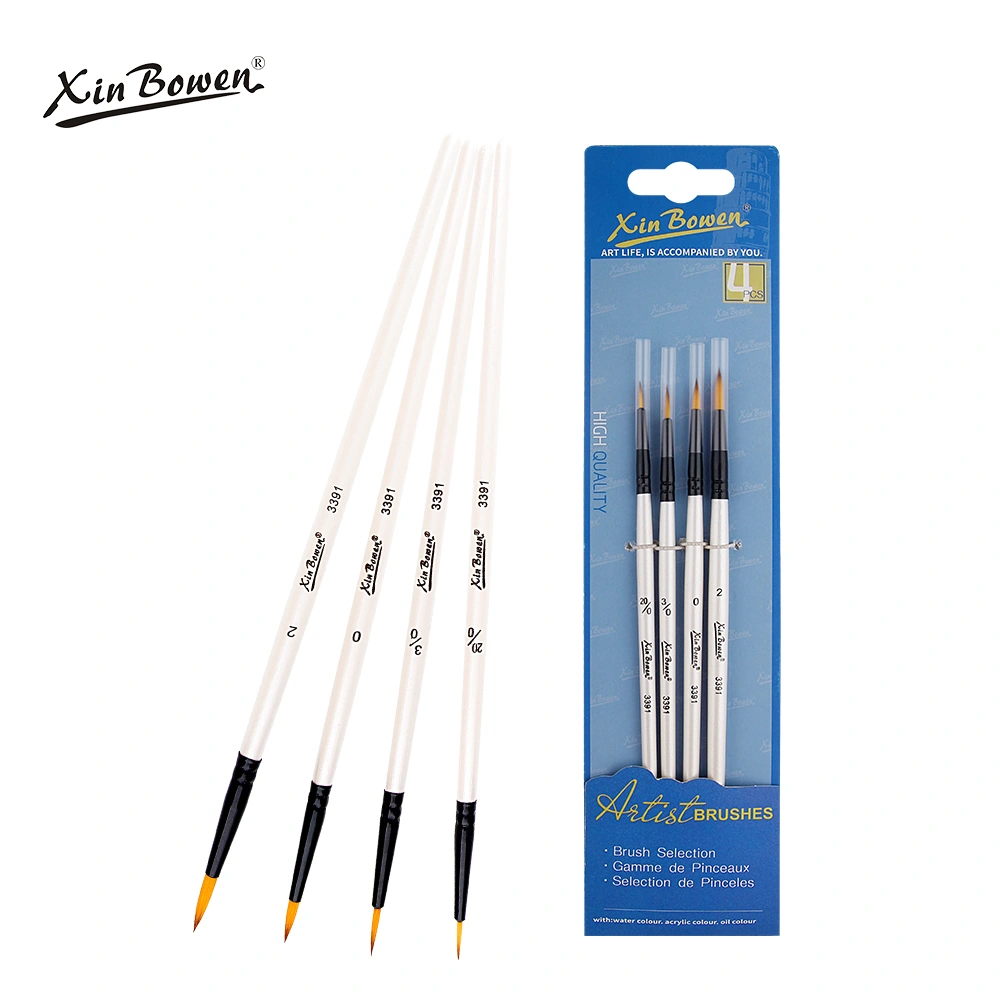
The grip acts as the maker’s link to the surface. It weighs right and feels good for the best hold. Makers usually give grips in plastic or wood. Birch wood works well for pro-level items because it stays light and easy to hold. For instance, our 4 Pieces Nylon Liner & Details Paintbrushes Set Pearl White Wood Handle has user-friendly grips. They cut down on hand tiredness in long make times. This makes them popular with art learners.
Art Paint Brush Hair Types: Which One Suits Your Medium?
Synthetic Art Paint Brushes: Versatility for Acrylics and Watercolors
Fake brushes grow as the go-to pick for acrylic and watercolor work. They stand up well and keep a clean tip. These often come from good nylon. They handle the strong stuff in acrylic paints. Plus, cleaning them beats real hair.
Natural Bristle Brushes: Texture and Stiffness for Oil Painting
Real hog bristle brushes keep their spot as the top pick for oil work. Moving thick, sticky paint needs firm and rough strands. The split tips, or “flags,” on the bristles grab lots of paint. This lets makers do long, rough lines. Our Plastic Handle Bristle Brushes are built to take the cleaners in oil painting. They give a solid fix for artists who want trusty gear for thick paint methods.
Decoding Brush Shapes: A Guide to Rounds, Flats, and More
Round and Liner Brushes for Details and Outlines
Round brushes rank as the handiest in a maker’s group. They suit drawing lines, borders, and close work. A good round brush needs to end in a thin tip. It should also spring back to form after each line. New users ought to begin with medium rounds, like in our mixed packs. This helps them learn to guide line size and flow.
Flat and Bright Brushes for Coverage and Broad Strokes
Flat brushes have a square finish. This fits covering big spots with hue, making strong sides, and working tight angles. They carry plenty of paint. So they prove key for filling forms or putting on clear coats. Seeing the hair length gap between a usual flat and a shorter “bright” one aids makers in picking for hold over spread.
Filbert and Fan Brushes for Blending and Special Effects
Unique forms like filberts and fans let makers get soft sides and odd feel effects. Standard brushes can’t match that. A filbert basically is a flat with round edges. It works great for mixing skin colors or making flower bits. Adding these to a Customized Artist Brush Set boosts the worth for mid-level students. They want to grow their style range.
Key Factors When Selecting the Best Art Paint Brush Sets
Why Starter Sets Offer the Best Value for Beginners
Getting a picked set often saves money and works better for new users than single buys. A usual set holds key sizes like #2, #4, #6, #8, #10, and #12. It spans from small lines to wide washes. Xin Bowen’s ready packs, like our common 240sets/CTN bulk setup, fit learning places and shops. They give a full, easy-sell answer that covers basic paint wants.
Inspecting Brush Quality: Snap, Spring, and Edge Retention
Pro buyers and makers should check a brush’s “snap,” or how it straightens up. They also look at its skill to keep a keen tip or point. We set strict check steps. Our group looks at every make part. This makes sure even our learner brushes keep fine spring and form hold. It cuts down the upset for fresh painters.
Safety Standards and Certifications to Look For
Safety stays a must, above all, when art items go to schools or kids. You must confirm that brushes and extra stuff meet world safety rules. Xin Bowen‘s goods undergo full tests and carry CPC, EN71, and MSDS certifications. This gives calm to world bringers and folks that our stuff lacks poison and suits all ages.
Why Xin Bowen is Your Premier Manufacturer for Art Supplies
Over 15 Years of Excellence in Brush Customization and Production
With more than 15 years of industry experience, Xin Bowen has established itself as a leader in the production and customization of art materials. We operate as an integrated industry and trade enterprise, meaning we control every aspect of the supply chain from raw material procurement to final packaging. Our deep understanding of market trends allows us to support customized orders, helping brands create unique product lines that stand out in a competitive market.
Comprehensive Solutions from Design to Global Distribution
More than manufacturing, we offer a package of services: design, quality assurance, and global logistics. Be it handle color requirement, logo printing, or custom packaging designs, specific and difficult customized requirements are handled by our professional team. More than just brushes, our product line includes a comprehensive range of easels, canvases, and sketch sets, which position Xin Bowen as your home for quality art supplies.
FAQ
Q: What is the most versatile type of paintbrush for a beginner artist?
A: In most cases, for a beginner, it will be best to have a synthetic brush with a round shape. It can easily work well with watercolor, acrylic, and even gouache paints, so it can do delicate work or broad strokes depending on how it’s used. Synthetic materials are also more durable and easier to clean, which can be an ideal choice for those who are still learning how to properly handle brushes.
Q: How do I choose between natural and synthetic hair brushes?
A: The choice depends largely on the medium you intend to use. Choose synthetic brushes for water-based media like acrylics because they resist damage from water and chemicals. Opt for natural hair, such as hog bristle, for oil painting, as the natural fibers handle thick paint and solvents better than most synthetics.
Q: Which safety certifications should I look for when buying art supplies?
A: You should always look for standard international safety certifications such as EN71 (European standard) and ASTM D-4236 or CPC (Children’s Product Certificate). These indicate that the materials, including paints and brush lacquers, have been tested for toxicity and are safe for use, particularly for children and educational environments.
Q: Is it better to buy brushes individually or in a set?
A: For beginners, buying a set of shapes would be more preferable as it includes a predetermined list of necessary shapes/sizes (e.g., rounds, flats), costing less per unit. There is no trial-and-error process of having to create a set of tools, as in the case of buying individual units, mainly when termed as replacements due to wear-out of some tools.
Q: What are the benefits of choosing customized art supplies for my business?
A: Customized art supplies help companies establish brand identity. By customizing the colors and designs on the handle and packaging, you can distinguish your product from the simple ones. But if you work with an OEM supplier, the product specifications should be designed according to the needs of your target market.