What Should Retailers Look for in Wholesale Paint Brushes?
Running an art supply shop means buying paint brushes is not just about counting pieces. You cannot only look at unit costs. Your brush selection needs to make sense to shoppers. These tools must survive everyday painting. Furthermore, shipments must arrive safely. They must also fit your store’s budget goals. Sometimes a bundle looks huge. However, if the tools do the exact same job, customers get confused. This issue also makes inventory refills quite difficult.
This problem hits wholesalers and distributors. It also impacts schools, art studios, and private label companies. Buyers must examine the actual tool. In addition, they need to review the product mix and packaging. They should also consider the sampling process and vendor communication.
New artistic trends in 2026 give purchasing managers good reasons to review their brush inventory. The Creativeworld trend report highlights bold strokes and abstract designs. It also encourages artistic experiments. The report talks about painting on different surfaces. These materials include cloth, glass, and clay. Such concepts offer great guidance for product selection. Nevertheless, every buyer must match their stock to their specific customer base and previous sales data.
Start with the Customer and the Use Case
Figure out who will actually use the tools before comparing fine details. You must also consider what those artists will paint. A classroom pack requires different features than a watercolor kit. A professional detail line has its own strict requirements. Deciding the primary use first helps buyers cut costs. This step stops them from buying unwanted shapes or useless packaging.
Which Brush Shapes Belong in a Core Range?
A strong product lineup generally includes tools for very specific tasks:
- Round brushes for lines, curves, and tiny spots. They also handle bending strokes well.
- Flat brushes for wide area coverage. They create straight borders and solid blocks of color.
- Liner brushes for long and thin marks. Artists use them for tight outlines.
- Detail brushes for miniature work. They are great for small touches and fine writing.
- Fan brushes for building soft textures. They help with blending and making rough marks.
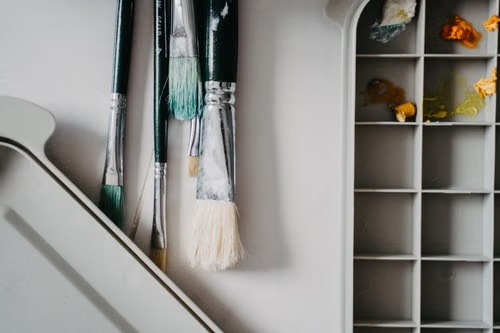
A basic paint brush set does not require every single style. Instead, it needs a practical mix that shoppers understand quickly. Retailers can place small starter kits right next to individual specialty tools. Therefore, users can replace one damaged size. They do not have to purchase an entirely new pack.
Our paintbrush category features single items. It also contains detail tools, liner brushes, and watercolor sets. We offer many other styles too. This broad variety helps B2B buyers build standard inventory groups. It also lets them create highly specialized product lines.
Which Media Should the Brushes Support?
You should name tools based on their actual tested purposes. Acrylic painters usually need bristles that maintain their shape against thick paint. These painters also require easy washing. Meanwhile, watercolor artists care deeply about water capacity. They want to know if the tool keeps a sharp tip. Gouache painters and mixed media creators often prefer a flexible middle option.
The “multi purpose” label only succeeds when buyers understand its real world value. Always check which paints and surfaces were tested before listing an item. Observe how the tool performs after a thorough wash. Finally, ensure the brush shape actually fits its advertised job.
Evaluate Samples Before Confirming a Bulk Order
A product photo displays the handle and the packaging box. However, a simple image cannot prove how the tool performs. Physical samples allow buyers to inspect the working tip closely. Purchasers can test the item using the correct paint type. Consequently, they can determine if the product matches their target audience and desired price tier.
What Should Buyers Test?
Use a steady sample check instead of just a fast look. For each tool or kit, look at:
- Shape and point: Does the end go back to its shape after use?
- Bristle retention: Are there loose hairs before or while painting?
- Paint release: Does the color flow smoothly, or does it clump up?
- Handle and ferrule: Do the pieces feel tight and easy to hold?
- Cleaning: Can you wash the tool using the right method for its paint?
- Packaging: Does it keep the tool head safe during transit and on the shelf?
Test more than one piece if you can. This can show changes between samples before it becomes a big issue in a full order. Buyers should write down what they see. They should agree on the passed sample as the guide for the order.
How Can Buyers Reduce Specification Confusion?
A product page should use steady names, sizes, materials, and kit parts. If one paper says “synthetic squirrel hair” and another uses a wide term like “synthetic bristle,” ask the maker to clear up the exact makeup before you say yes. The same goes for the metal part material, handle coat, single box, and box count.
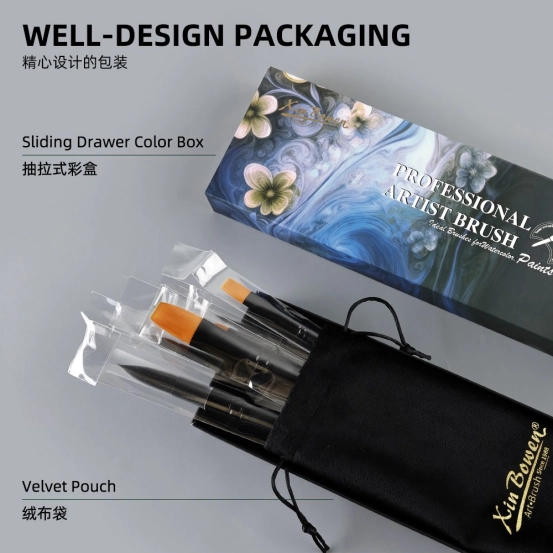
Xin Bowen’s six piece professional watercolor brush set mixes synthetic squirrel hair and nylon with a birchwood handle. It notes watercolor, gouache, acrylic, ink drawing, and mixed media as uses. Buyers can take those facts as a starting point for sample questions. Then, they can check that the sample meets their own needs.
Build Assortments Around the Shelf and the Customer
A solid wholesale paint brushes line is not always the one with the most types. It is the one with a clear route from novice to expert, without needless repeats. Choice planning should think about shelf space, likely restocks, and goal price points. It should also consider if items are sold alone or as kits.
Should a Retailer Stock Sets, Singles, or Both?
Kits are simple to show as a full buy. Singles offer choice and make swapping easier. Many stores do well by having both. They keep a few small kits for fresh painters. They offer larger kits for classes or studios. They also keep picked single tools for specific jobs.
A useful selection might have:
- A basic roundand flat pack for novices
- A watercolor pack with a mix of shapes
- Thin liner and detail tools for exact work
- Single common sizes for swap buys
- A special group for texture or craft uses
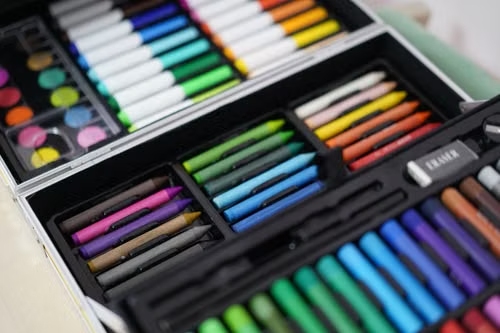
This method can also back related goods. A sketching art set lets users plan a picture before painting. Artist canvases and paper grow the range of bases. A paint knife and paper palette can finish off an acrylic kit. These links help stores. Yet, each item must have a clear job, rather than just being added to boost the kit’s piece count.
How Do Current Creative Trends Affect Buying?
The 2026 trend facts point to trying things and bold marks. This includes painting and styling on different bases. For buyers, that means checking if their list serves only classic canvas work. Or, does it also have goods for cloth, glass, craft, and school tasks? It does not mean every trend needs a new item code.
A smart buyer can start with a small test group. They can gather sales data and user views. Then, they can grow what works well. This helps mix trend driven goods with steady core items.
Plan Private Label Brushes and Packaging Early
Private label tasks involve more than just adding a mark. Tool shapes, kit makeup, card or box art, item tags, barcode spots, and shipping safety all need a yes. These choices change costs, making times, and the user’s first view.
What Should Be Agreed Before Production?
Before big making starts, buyers and makers should agree on:
- Passed tool materials and sizes
- Kit parts and item names
- Mark files and print colors
- Box style and sizes
- Barcode and needed item facts
- Sample passing and change tracking
- Box packing and shipping marks
- Check rules and delivery timing
For instance, private label brushes might be packed one by one for store hooks. Or, they might be placed in a box for a multi piece kit. The best layout depends on the shop’s setup and the user’s planned use. Ask for box samples or clear models before final agreement.
Xin Bowen gives OEM and ODM teamwork. This includes changing current styles and making items just for a client. Our one stop service handles item picking, design, making, quality checks, boxing, and shipping. Buyers can also look at our wider product range when setting up a matching group of tools and related art supplies.
What Makes a Brush Supplier Useful Beyond the First Order?
A solid brush supplier should be able to talk about the item in clear words. They must reply to sample notes. They also need to keep agreed details linked to making. Talking matters before a buy and after it. Buyers should ask who checks art. They should know how changes are kept, what check steps exist, and how making news is shared.
Cost stays key. But, the lowest price is not always the cheapest pick. This is true if the item comes with mixed sizes, poor boxes, or vague details. Think about the whole order. Look at item quality, boxes, box layout, wait time, and the work needed to fix issues.
At Xin Bowen, we deal with stores, distributors, schools, and art brands. We handle tool goods and matching art material kits. Our item facts list tool shapes, hair materials, boxes, and planned media. This gives buyers solid points to check during sample testing.
Conclusion
Getting wholesale paint brushes is a product planning choice, not just a cost check. Buyers should start with the user and the painting job. Next, check tool shape, hair action, sample steadiness, boxes, and restock needs. A tight mix of kits and single tools can help novices. It also leaves space for expert use. Trend driven goods might start new chances in cloth, glass, craft, and mixed media areas. However, small tests and user views should guide growth. For private label jobs, agree on art, details, samples, check rules, and box facts before making starts. A maker who talks clearly across those steps can help buyers set up a selection. This selection will be simpler to explain, sell, and restock.
FAQs
Q: What should a wholesale paint brush order include?
A: A clear plan, a passed sample, box facts, box count, check rules, and a delivery plan.
Q: Should retailers buy brush sets or individual brushes?
A: Both can meet different needs. Kits fit novices, while single tools help with swaps and expert jobs.
Q: What should buyers test in a brush sample?
A: Check its tip, shape holding, paint flow, hair drop, handle feel, washing, and box safety.